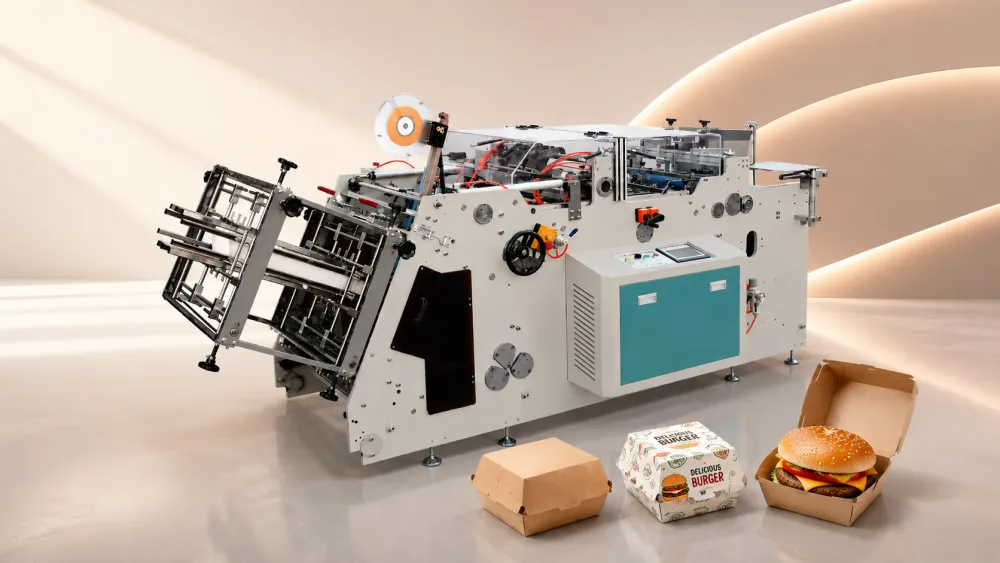

Why Choosing the Right Lunch Box Machine Is More Important Than Choosing the Fastest Machine
Many first-time buyers focus on production speed when evaluating lunch box machines. However, experienced packaging manufacturers know that speed is only one part of the decision.
The most important question is whether the machine can consistently produce the box style, size, material, and quality required by your market. A machine that produces the wrong product at high speed will not help your business succeed.
Before requesting quotations, buyers should first evaluate product requirements, material specifications, future production plans, and local market demand.
Step 1: Identify the Type of Lunch Box You Want to Produce
Different lunch box designs require different forming technologies and machine configurations. Understanding your target product is the first step in selecting suitable equipment.
Common Lunch Box Types
- Hamburger boxes
- Takeaway meal boxes
- Compartment lunch boxes
- Noodle boxes
- Salad containers
- French fries boxes
- Fast food packaging boxes
- Custom food containers
Many buyers send product photos or physical samples to manufacturers before discussing machine specifications. This often helps identify the most suitable machine configuration faster than discussing technical parameters alone.
Step 2: Confirm Box Size and Mold Requirements
Lunch box machines are typically designed around specific mold configurations. Before purchasing equipment, buyers should confirm:
- Length and width of the box
- Height and depth
- Open or closed structure
- Number of compartments
- Lid design requirements
- Future product expansion plans
If multiple box sizes will be produced, ask whether molds can be changed easily and how long size changeovers require during production.
Step 3: Understand Which Paper Materials Will Be Used
Paper material selection affects machine compatibility, forming quality, sealing performance, and environmental compliance.
Common Materials
- PE coated paperboard
- PLA coated paperboard
- Kraft paperboard
- Water-based coated paperboard
- Food-grade paperboard
Many regions now encourage recyclable or compostable food packaging. Buyers serving European, North American, and Australian markets should verify material compatibility before placing equipment orders.
Step 4: Evaluate Real Production Capacity Requirements
Not every factory needs the highest-speed machine available.
Choosing equipment based on realistic production demand often results in better investment returns and lower operating costs.
| Business Type | Typical Capacity Requirement |
| Startup Factory | 30–60 boxes/min |
| Growing Manufacturer | 60–120 boxes/min |
| Large Production Facility | 120+ boxes/min |
Production speed should always be evaluated together with labor availability, order volume, and packing efficiency.
Step 5: Determine Whether You Need a Single Machine or a Complete Production Line
Many first-time investors assume that one machine is enough to start production.
In reality, a complete lunch box production workflow often includes several stages.
Typical Production Process
Artwork Design → Printing → Die Cutting → Lunch Box Forming → Inspection → Packing
Depending on the project, buyers may require:
- Printing machines
- Die cutting machines
- Lunch box forming machines
- Packing equipment
- Quality inspection systems
Discussing the complete workflow before purchasing equipment can reduce future expansion costs.
Step 6: Review Finished Product Quality Before Ordering
Finished product quality directly affects customer satisfaction and brand reputation.
Before making a purchase decision, request:
- Finished box samples
- Production videos
- Factory testing records
- Material compatibility demonstrations
Key areas to evaluate include:
- Corner folding quality
- Box shape consistency
- Structural strength
- Food containment performance
- Visual appearance
Step 7: Check Certifications and Market Compliance Requirements
Certification requirements vary between countries and industries.
Buyers should discuss certification requirements before machine production begins.
Common requirements may include:
- CE certification
- SGS reports
- Food-contact material documentation
- Export compliance documents
- Electrical safety documentation
Preparing these documents early can help reduce delays during customs clearance and project approval.
Step 8: Consider Spare Parts and Long-Term Technical Support
Machine reliability is important, but support after delivery is equally important.
Many buyers focus heavily on machine price and overlook long-term operational support.
Questions worth asking include:
- Are spare parts readily available?
- Can technical support be provided remotely?
- Is operator training available?
- Can molds be supplied in the future?
- How are troubleshooting requests handled?
Reliable support helps reduce downtime and protects production continuity.
Why Distributors and Project Buyers Need Additional Support
Many distributors and trading companies are not lunch box production specialists. Their customers often request technical specifications, material recommendations, mold advice, and production planning assistance.
Working with a manufacturer that provides project consultation, technical communication, installation guidance, spare parts support, and documentation assistance can make it easier to serve customers and build long-term business relationships.
Final Thoughts
The best lunch box machine is not necessarily the fastest or the cheapest. It is the machine that matches your product design, material requirements, production goals, market regulations, and future growth plans.
Before investing, buyers should evaluate box types, dimensions, materials, production capacity, workflow requirements, certifications, and long-term support services. Taking time to assess these factors can help reduce risk and create a more successful packaging production project.