What Is the Label Production Process?
Labels are used on millions of products every day, from food packaging and beverage bottles to cosmetics, pharmaceuticals, logistics cartons, and industrial products. While most people only see the finished label, a complete manufacturing process takes place before the label reaches the final product.
Modern label production combines printing, converting, inspection, and finishing technologies to create high-quality labels that meet branding, regulatory, and production requirements.
Although different label products may require different production methods, most self-adhesive labels follow a similar workflow from artwork preparation to finished roll delivery.
Typical Label Manufacturing Workflow
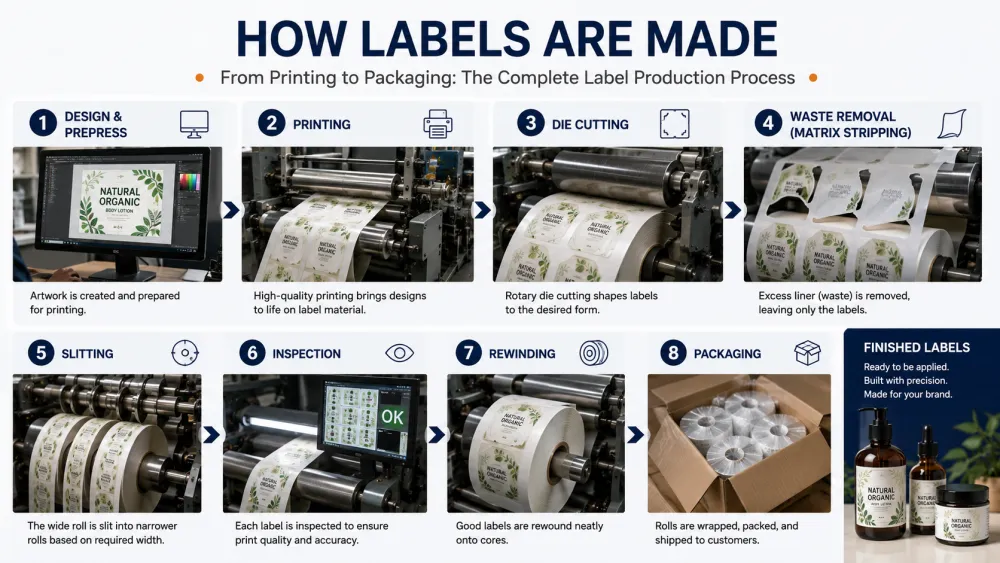
A typical label production process includes the following stages:
Artwork Design → Printing → Surface Finishing → Die Cutting → Slitting → Inspection → Packaging
Each stage plays an important role in ensuring final label quality, production efficiency, and downstream application performance.
Step 1: Artwork Preparation and Prepress
Every label project begins with artwork creation and prepress preparation.
Before production starts, designers prepare:
- Label dimensions
- Color specifications
- Brand graphics
- Barcodes and QR codes
- Variable information
- Regulatory content
The artwork file is then processed to ensure compatibility with the printing equipment and selected label material.
Step 2: Label Printing
Printing is the stage where graphics, text, barcodes, and branding elements are transferred onto the label material.
Common printing technologies include:
- Flexographic printing
- Digital printing
- Offset printing
- Screen printing
- Combination printing systems
Flexographic printing remains one of the most widely used technologies for medium and large-volume label production because it offers high speed, stable quality, and excellent material compatibility.
Typical materials printed during this stage include:
- Self-adhesive paper
- BOPP film
- PET film
- PE film
- Thermal paper
- Transparent label materials
Step 3: Surface Finishing and Protection
Many labels require additional finishing processes after printing.
These finishing steps improve appearance, durability, and product performance.
Common finishing options include:
- UV varnishing
- Gloss coating
- Matte coating
- Lamination
- Cold foil decoration
- Embossing
For premium packaging applications such as wine labels, cosmetics, and luxury products, finishing processes often play a significant role in brand presentation.
Step 4: Label Die Cutting
After printing and finishing, labels must be cut into their final shape.
This process is called die cutting.
Die cutting removes excess material around the label while leaving the label attached to the release liner.
Common die cutting methods include:
- Rotary die cutting
- Semi-rotary die cutting
- Flatbed die cutting
Depending on production volume, label shape complexity, and tooling requirements, manufacturers select the most suitable die cutting technology.
Step 5: Slitting and Rewinding
After die cutting, large master rolls are usually too wide for final delivery.
Slitting machines divide these rolls into narrower finished rolls according to customer specifications.
During slitting and rewinding, manufacturers control:
- Finished roll width
- Roll diameter
- Tension stability
- Edge quality
- Winding consistency
Proper slitting helps improve label application performance and reduces problems during automatic labeling operations.
Step 6: Label Inspection and Quality Control
Quality inspection is one of the most important stages in label manufacturing.
Even small defects can create significant problems for brand owners and packaging operations.
Modern inspection systems help detect:
- Color variation
- Missing print
- Registration errors
- Die cutting defects
- Contamination
- Barcode quality issues
Many manufacturers now use vision inspection systems to monitor production quality continuously and reduce waste.
Step 7: Finished Roll Packaging
Once inspection is completed, finished rolls are packaged according to customer requirements.
Packaging may include:
- Individual roll wrapping
- Carton packaging
- Pallet loading
- Export packaging
- Product identification labels
Proper packaging protects label quality during transportation and storage before application.
What Machines Are Needed for Label Production?
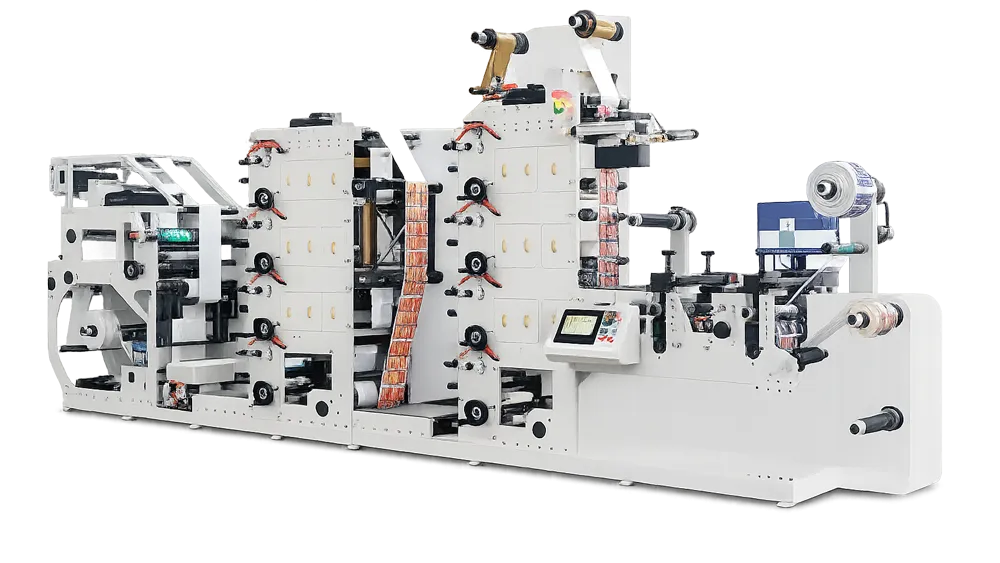
A complete label manufacturing workflow often requires several different machines.
| Production Stage | Typical Equipment |
| Printing | Label Printing Machine |
| Finishing | UV Coating or Laminating Unit |
| Die Cutting | Label Die Cutting Machine |
| Slitting | Label Slitting Machine |
| Inspection | Label Inspection Machine |
Some modern production lines integrate multiple processes into a single machine, while larger factories may operate separate machines for each stage.
Common Label Applications
Label production equipment is used across a wide range of industries.
- Food labels
- Beverage labels
- Cosmetic labels
- Pharmaceutical labels
- Logistics labels
- Industrial labels
- Chemical labels
- Retail packaging labels
Different industries may require specific materials, adhesives, printing technologies, and quality standards.
How to Plan a Label Production Line
When planning a new label manufacturing project, buyers should evaluate:
- Label material types
- Production volume
- Number of colors
- Label size range
- Finishing requirements
- Roll specifications
- Future expansion plans
Understanding the complete production process helps buyers select the right equipment configuration and avoid unnecessary investment costs.
Conclusion
The label production process involves much more than printing. Modern label manufacturing combines printing, finishing, die cutting, slitting, inspection, and packaging to create labels that meet increasingly demanding market requirements.
Whether you are planning a new label factory, expanding production capacity, or evaluating equipment investments, understanding how labels are made is the first step toward building an efficient and reliable label production workflow.