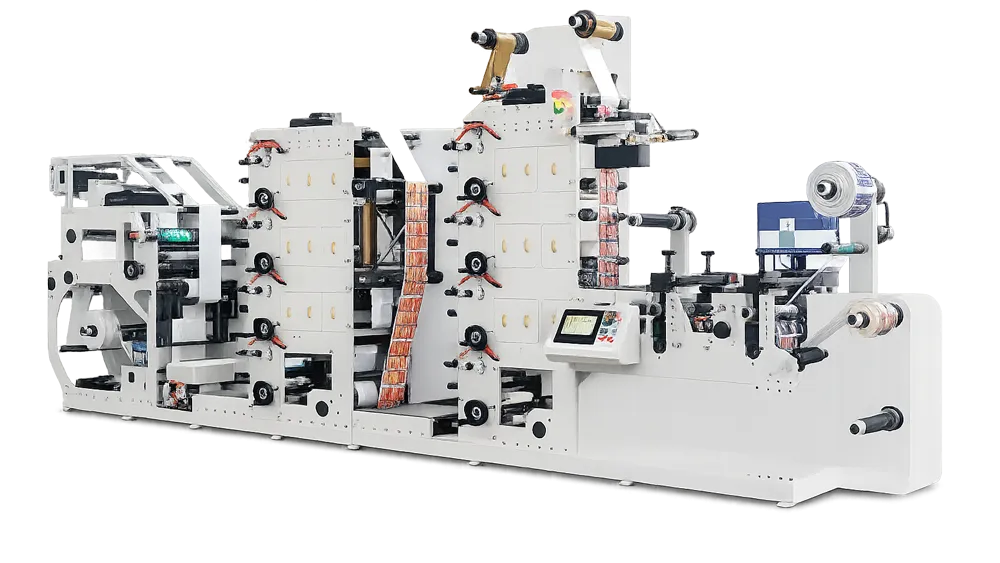

Why Choosing the Right Label Printing Machine Is Difficult for Many Buyers
One of the most common questions in the label industry is simple:
"Which label printing machine should I buy?"
The challenge is that there is no single answer. Modern label production uses various printing technologies, including flexographic printing, digital printing, offset printing, gravure printing, and hybrid systems. Even within flexographic printing, buyers may encounter stack flexo presses, unit type flexo presses, CI flexo presses, and gearless CI flexo presses.
For experienced label manufacturers, these differences may be familiar. However, many equipment buyers are distributors, sourcing companies, project managers, or investors who are not label production specialists.
Their biggest concern is often not machine price—it is choosing the wrong technology and investing in equipment that does not match customer requirements.
This guide explains how different label products influence machine selection and how buyers can identify the most suitable printing technology before requesting quotations.
Start with the Labels You Plan to Produce
Before comparing machine models, buyers should first understand the type of labels they intend to manufacture.
Different label products require different materials, printing quality levels, production volumes, and finishing processes.
Common Label Categories
- Food labels
- Beverage labels
- Cosmetic labels
- Pharmaceutical labels
- Logistics labels
- Industrial labels
- Chemical labels
- Promotional stickers
- Premium packaging labels
In many cases, the label itself determines the most suitable printing technology before machine selection even begins.
Choose Based on Label Material
Label materials significantly affect printing requirements and machine configuration.
| Material | Typical Applications | Recommended Technologies |
| Self-Adhesive Paper | Food, logistics, retail | Flexographic Printing |
| BOPP Film | Beverage, personal care | CI Flexo, Gearless CI Flexo |
| PET Film | Cosmetics, premium labels | CI Flexo, Digital Hybrid |
| PE Film | Squeeze bottles, chemicals | CI Flexo |
| Thermal Paper | Logistics, shipping labels | Flexographic Printing |
| Transparent Labels | Cosmetics, beverages | CI Flexo, Digital Hybrid |
Film materials such as BOPP, PET, and PE generally require more advanced tension control and registration systems than standard paper labels.
How Production Volume Affects Machine Selection
Production volume is one of the most important factors when choosing a label printing machine.
Short-Run Production
If customers regularly order small quantities and frequently change designs, digital printing may be the most practical solution.
Digital systems eliminate printing plates and reduce setup time, making them ideal for customized production.
Medium-Volume Production
For growing label manufacturers serving food, retail, and logistics markets, flexographic printing often provides the best balance between productivity and operating cost.
Large-Volume Production
When production involves millions of labels each month, flexographic printing becomes significantly more economical due to its lower cost per label and higher production speed.
Understanding Different Flexographic Printing Machines
Many buyers know they need a flexographic printing machine but are unsure which type of flexo press is suitable for their business.
Stack Flexographic Printing Machine
Stack flexo presses are commonly used for simpler paper label applications and entry-level production.
Advantages include:
- Lower investment cost
- Simpler operation
- Suitable for basic label production
They are often selected by startups and smaller converters focusing on standard paper labels.
Unit Type Flexographic Printing Machine
Unit type flexo presses provide greater flexibility and are widely used in self-adhesive label production.
They support multiple label sizes, materials, and printing configurations while maintaining good registration performance.
CI Flexographic Printing Machine
CI (Central Impression) flexo presses are designed for higher registration accuracy, especially when processing film materials.
They are commonly used for:
- BOPP labels
- PET labels
- PE labels
- Flexible packaging materials
The central impression drum helps maintain stable web handling and improved print consistency.
Gearless CI Flexographic Printing Machine
Gearless CI presses represent one of the most advanced flexographic printing technologies available today.
They offer:
- Higher registration accuracy
- Improved automation
- Faster job changeovers
- Better consistency during long production runs
They are often selected by large manufacturers producing premium labels and high-end packaging products.
When Is Digital Printing the Better Choice?
Many buyers assume digital printing is always superior because it is newer technology.
In reality, digital printing is designed for specific production environments.
Digital printing is often the better choice when:
- Production runs are short
- Designs change frequently
- Variable data printing is required
- Fast job turnaround is important
For large-volume production, flexographic printing usually provides significantly lower operating costs.
A Simple Machine Selection Guide
| Label Type | Recommended Technology |
| Food Labels | Flexographic Printing |
| Beverage Labels | Flexographic Printing |
| Logistics Labels | Flexographic Printing |
| BOPP Film Labels | CI Flexographic Printing |
| PET Film Labels | CI Flexographic Printing |
| Transparent Labels | CI Flexo or Digital Hybrid |
| Short-Run Customized Labels | Digital Printing |
| Premium Cosmetic Labels | Gearless CI Flexo or Hybrid Systems |
What If You Are Not a Label Printing Expert?
Many buyers are not label production specialists.
A large percentage of inquiries come from distributors, sourcing companies, project buyers, and investors who are helping customers find equipment rather than operating a label factory themselves.
Their biggest challenge is often understanding what the customer actually needs.
A customer may simply request a "label printing machine," but critical information is often missing:
- Label material type
- Print quality expectations
- Production volume
- Number of colors
- Finishing requirements
- Roll width specifications
- Future expansion plans
Without these details, machine selection becomes difficult and mistakes become expensive.
How RUIDA Machine Helps Buyers and Distributors
RUIDA Machine works with label manufacturers, distributors, sourcing companies, and project buyers from different countries.
Instead of immediately recommending a machine model, our team first helps identify the actual production requirements behind the project.
This approach helps buyers avoid purchasing equipment that is too small, too complex, or unsuitable for the intended application.
Our engineering and sales teams regularly assist customers with:
- Evaluating label samples and customer requirements
- Identifying suitable printing technologies
- Comparing flexographic and digital solutions
- Determining required printing width and color stations
- Planning complete label production workflows
- Selecting compatible die cutting, slitting, and inspection equipment
For distributors, this support makes customer communication easier because technical discussions can be handled together with the factory engineering team.
For end users, it reduces project risk and improves investment confidence.
Information That Helps Us Recommend the Right Solution
If you are unsure which label printing machine is suitable for your project, the following information can help accelerate evaluation:
- Photos of existing labels
- Label dimensions
- Material specifications
- Number of print colors
- Monthly production volume
- Finished roll requirements
- Target industry or market
Even if complete technical specifications are not available, label samples or photos are often sufficient for an initial recommendation.
Conclusion
Choosing a label printing machine is not about finding the most expensive or most advanced technology. It is about selecting equipment that matches your labels, materials, production volume, customer expectations, and future business plans.
Whether you are a label manufacturer, distributor, sourcing company, or new investor, understanding the relationship between label products and printing technologies is the first step toward making a successful equipment investment.
If you are unsure which technology is suitable for your project, discussing your label samples, materials, and production goals with an experienced equipment supplier can help simplify the decision-making process and reduce investment risk.