How Much Does a Lunch Box Machine Cost?
Paper lunch box machines are becoming an increasingly popular investment as global demand grows for sustainable takeaway food packaging. Restaurants, food delivery services, supermarkets, and fast-food chains are replacing plastic containers with paper-based packaging, creating new opportunities for manufacturers entering the paper lunch box industry.
However, the purchase price of a lunch box machine is only one part of the investment decision. Machine configuration, production speed, product flexibility, automation level, mold design, and long-term operating efficiency all influence the total project cost.
Rather than focusing only on the initial quotation, successful buyers evaluate the overall production capability and expected return on investment over the machine's service life.
Typical Lunch Box Machine Investment Range
Machine prices vary according to production capacity, automation level, and the types of food containers the equipment can manufacture. The following table provides a general comparison of common investment categories.
| Machine Type | Typical Investment Level | Recommended For |
|---|---|---|
| Entry-Level Forming Machine | Entry-Level Investment | Small factories and startup businesses |
| Standard Automatic Machine | Mid-Level Investment | Growing food packaging manufacturers |
| Servo High-Speed Machine | Premium Investment | Large-scale commercial production |
| Fully Automated Production Line | Project-Based Investment | Industrial packaging factories |
Choosing equipment should be based on production efficiency and long-term operating costs rather than simply selecting the lowest quotation.
What Factors Affect Lunch Box Machine Pricing?
Two lunch box machines may appear similar, yet their quotations can differ significantly. The following technical and production factors have the greatest influence on equipment pricing.
Production Speed
Higher production speeds require stronger machine structures, more precise forming systems, and advanced automation, increasing both manufacturing quality and equipment value.
Automation Level
Automatic feeding, servo-driven forming, intelligent PLC control, automatic counting, and production monitoring improve productivity while reducing labor requirements.
Product Flexibility
Machines capable of producing multiple lunch box styles by changing molds generally offer greater production flexibility and higher long-term business value.
Machine Structure
A rigid machine frame, precision transmission system, and stable forming mechanism contribute to higher operating stability and longer equipment life.
Electrical Configuration
Premium electrical components, servo systems, sensors, and PLC controllers improve machine reliability, production consistency, and maintenance efficiency.
Recommended Machine Selection by Daily Production Capacity
Selecting equipment according to production demand helps maximize equipment utilization while avoiding unnecessary capital investment.
| Daily Production Requirement | Recommended Machine Type | Typical Buyer |
|---|---|---|
| Below 20,000 Boxes | Entry-Level Automatic Machine | Startup manufacturers |
| 20,000–60,000 Boxes | Standard Automatic Machine | Regional packaging suppliers |
| 60,000–120,000 Boxes | High-Speed Servo Machine | Large food packaging factories |
| 120,000+ Boxes | Automated Production Line | Industrial manufacturers and export suppliers |
Which Lunch Box Products Can One Machine Produce?
One of the biggest advantages of modern lunch box machines is their ability to manufacture multiple food packaging products by changing molds. This flexibility allows manufacturers to respond quickly to changing customer demands while maximizing equipment utilization.
| Product Type | Typical Application |
|---|---|
| Hamburger Boxes | Fast-food restaurants and takeaway chains |
| Lunch Boxes | Meal delivery and catering services |
| Clamshell Food Boxes | Takeaway meals and ready-to-eat foods |
| French Fries Boxes | Snack shops and quick-service restaurants |
| Snack Boxes | Street food, desserts, and bakery products |
| Takeaway Food Containers | Supermarkets, restaurants, and food delivery platforms |
For an overview of different machine configurations suitable for various food packaging products, explore our Lunch Box Machines collection page.
Hidden Investment Costs Beyond the Machine
The purchase price of a lunch box machine is only part of the total investment required to establish a paper food container production line. Buyers should also budget for supporting equipment, tooling, factory preparation, and operator training to ensure a smooth production startup.
Planning the complete investment in advance helps avoid unexpected expenses and allows manufacturers to estimate project profitability more accurately.
| Investment Item | Purpose |
|---|---|
| Lunch Box Machine | Main forming equipment for paper food containers. |
| Forming Molds | Different lunch box styles and sizes require dedicated mold sets. |
| Air Compressor | Provides stable pneumatic pressure during machine operation. |
| Electrical Installation | Power supply, wiring, and machine commissioning. |
| Paper Materials | PE-coated, PLA-coated, water-based coated, or plastic-free paperboard. |
| Factory Preparation | Production area, storage space, ventilation, and material handling. |
| Installation & Training | Machine setup, operator training, and production testing. |
| Spare Parts | Essential wear components for preventive maintenance. |
Considering these costs together provides a more realistic understanding of the total project investment rather than evaluating the machine price alone.
Why Do Similar Lunch Box Machines Have Different Prices?
It is common for buyers to receive quotations that vary considerably for machines producing similar paper food containers. These differences are usually related to machine configuration, manufacturing quality, automation, and long-term production performance rather than appearance alone.
| Factor | How It Influences Price |
|---|---|
| Production Speed | Higher-speed equipment requires stronger mechanical structures and more precise forming systems. |
| Automation Level | Servo control, automatic feeding, counting, and monitoring improve efficiency and increase equipment value. |
| Machine Structure | Heavy-duty frames and precision-machined components improve long-term stability. |
| Electrical Components | Premium PLCs, servo systems, and sensors provide greater reliability. |
| Mold Design | High-precision molds improve forming consistency and product appearance. |
| Technical Support | Installation, training, and after-sales service contribute to long-term production success. |
The lowest quotation is not always the lowest-cost solution over the lifetime of the equipment. Reliability, production efficiency, and service support often have a greater impact on long-term profitability.
Which Lunch Box Products Typically Offer the Best Return on Investment?
Market demand for paper food packaging continues to grow as restaurants, supermarkets, and food delivery businesses replace plastic containers with more sustainable alternatives. While actual profitability depends on local market conditions, the following products are commonly considered attractive production opportunities.
| Product | Typical Market Demand | Production Flexibility |
|---|---|---|
| Hamburger Boxes | Very High | Suitable for fast-food chains and takeaway restaurants. |
| Lunch Boxes | Very High | Widely used for meal delivery and catering services. |
| Clamshell Food Boxes | High | Popular for takeaway meals and ready-to-eat foods. |
| French Fries Boxes | High | Common in snack bars, cinemas, and quick-service restaurants. |
| Snack Boxes | Medium to High | Suitable for bakeries, desserts, and street food vendors. |
| Takeaway Food Containers | Very High | Broad application across restaurants, supermarkets, and delivery platforms. |
Manufacturers capable of producing multiple box styles by changing molds are generally better positioned to respond to seasonal demand and customer customization requirements.
Questions Buyers Should Ask Before Requesting a Quote
Preparing detailed project information before requesting quotations helps suppliers recommend more suitable machine configurations and allows buyers to compare proposals more effectively.
| Question | Why It Matters |
|---|---|
| Which lunch box styles can the machine produce? | Determines production flexibility and mold requirements. |
| What paper materials are supported? | Ensures compatibility with food packaging specifications. |
| How many mold sets are included? | Clarifies the initial production capability and future expansion costs. |
| What is the recommended production speed? | Helps estimate daily production capacity. |
| Is installation and operator training included? | Supports faster production startup. |
| Which spare parts should be stocked? | Improves long-term maintenance planning and reduces downtime. |
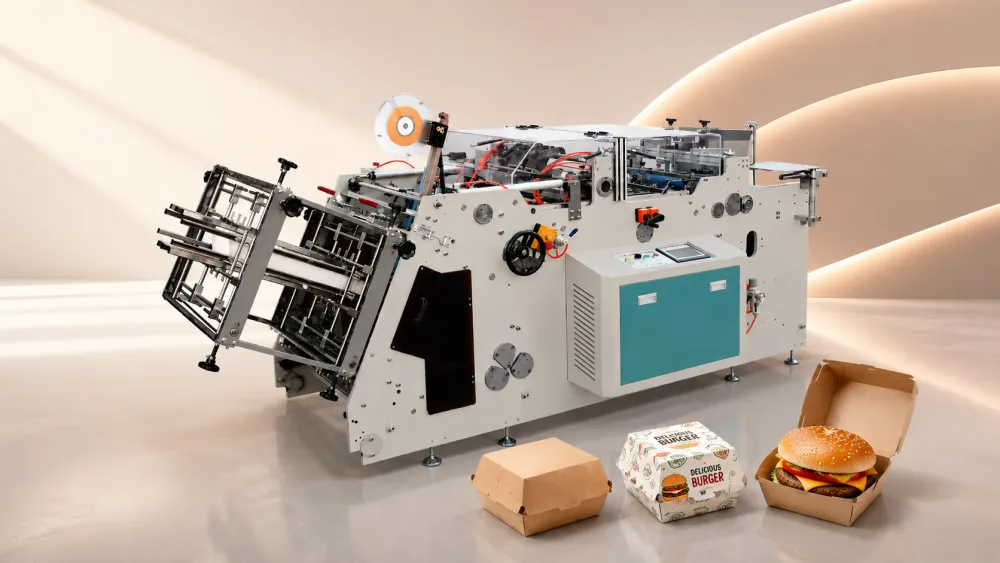
For manufacturers planning to produce hamburger boxes and other clamshell-style food packaging, our Hamburger Box Making Machine RD-HBH provides an efficient solution for high-quality paper food container production with reliable forming performance and flexible mold options.
Common Investment Mistakes When Buying a Lunch Box Machine
Many first-time buyers focus primarily on the initial machine quotation while overlooking other factors that determine long-term production efficiency and business profitability. Careful project planning helps manufacturers avoid unnecessary costs and select equipment that supports future business growth.
| Common Mistake | Recommended Approach |
|---|---|
| Selecting equipment based only on the lowest price | Evaluate machine quality, production efficiency, technical support, and long-term operating costs. |
| Ignoring future product expansion | Choose machines that can support multiple lunch box styles through mold changes. |
| Purchasing without understanding target customers | Identify whether production will focus on restaurants, food delivery, supermarkets, or distributors before selecting equipment. |
| Underestimating mold investment | Include mold costs when planning the overall project budget. |
| Overlooking factory preparation | Prepare utilities, production space, compressed air, and operator training before installation. |
A successful investment is based on selecting equipment that matches production goals, market demand, and long-term business planning rather than simply minimizing the initial purchase price.
Typical Lunch Box Production Project Timeline
Most paper lunch box production projects follow a similar implementation process. Proper planning before equipment delivery helps shorten commissioning time and allows manufacturers to begin commercial production more quickly.
| Project Stage | Typical Duration | Main Activities |
|---|---|---|
| Project Planning | 1–3 Days | Confirm product styles, machine configuration, and production requirements. |
| Machine Manufacturing | 20–45 Days | Machine assembly, testing, quality inspection, and factory acceptance. |
| International Shipping | 15–40 Days | Transportation to the customer's destination. |
| Factory Preparation | Before Machine Arrival | Prepare electrical supply, compressed air, production area, and raw materials. |
| Installation & Commissioning | 2–4 Days | Machine installation, testing, and production parameter adjustment. |
| Operator Training | 1–2 Days | Machine operation, routine maintenance, and troubleshooting guidance. |
| Commercial Production | Within the First Week | Begin stable production and optimize manufacturing efficiency. |
Factories that complete site preparation before equipment delivery generally achieve faster production startup and a shorter return-on-investment period.
Frequently Asked Questions
How much does a lunch box machine typically cost?
The investment depends on production speed, automation level, mold configuration, product flexibility, and machine specifications. High-speed servo machines generally require a higher initial investment but offer greater production efficiency and lower operating costs over time.
Why do quotations from different manufacturers vary so much?
Price differences are usually related to machine structure, forming technology, automation level, electrical components, mold quality, production capacity, and after-sales service rather than appearance alone.
Can one machine produce different lunch box styles?
Yes. Most modern lunch box machines can manufacture multiple products by changing molds, allowing manufacturers to expand their product range without purchasing additional forming equipment.
What materials can lunch box machines process?
Depending on machine configuration, manufacturers commonly process PE-coated paperboard, PLA-coated paperboard, water-based coated paper, and plastic-free food-grade paper materials.
What additional equipment is required?
Typical projects also require an air compressor, mold sets, electrical installation, packaging materials, raw material handling equipment, and routine maintenance tools.
How long does installation usually take?
When the factory is properly prepared, installation, commissioning, and operator training are typically completed within several days.
How can manufacturers improve return on investment?
Selecting reliable equipment, producing multiple lunch box styles, reducing material waste, and maintaining stable production efficiency all contribute to stronger long-term profitability.
Is preventive maintenance important for lunch box machines?
Yes. Scheduled maintenance helps reduce unexpected downtime, extend equipment service life, maintain forming accuracy, and ensure consistent product quality throughout continuous production.
Choose Equipment That Supports Long-Term Business Growth
Investing in a lunch box machine is more than purchasing production equipment—it is an investment in future manufacturing capability. Buyers should evaluate production efficiency, product flexibility, machine reliability, technical support, and long-term operating costs when comparing different equipment solutions.
As global demand for sustainable food packaging continues to grow, manufacturers that invest in reliable, flexible, and efficient production equipment will be better positioned to serve restaurants, takeaway brands, supermarkets, and food delivery businesses while expanding into new packaging markets.