Why Preventive Maintenance Matters for Paper Bowl Machines
A paper bowl machine is designed for continuous, high-volume production, often operating for many hours each day. Without regular maintenance, normal wear can gradually reduce production efficiency, increase defect rates, and shorten the service life of critical machine components.
Preventive maintenance is not simply about fixing problems after they occur. It is a structured approach that identifies potential issues before they cause unexpected downtime, helping manufacturers maintain stable production and reduce long-term operating costs.
Whether your factory produces soup bowls, noodle bowls, salad bowls, or takeaway food containers, establishing a consistent maintenance routine is one of the most effective ways to improve equipment reliability and production efficiency.
Benefits of Preventive Maintenance
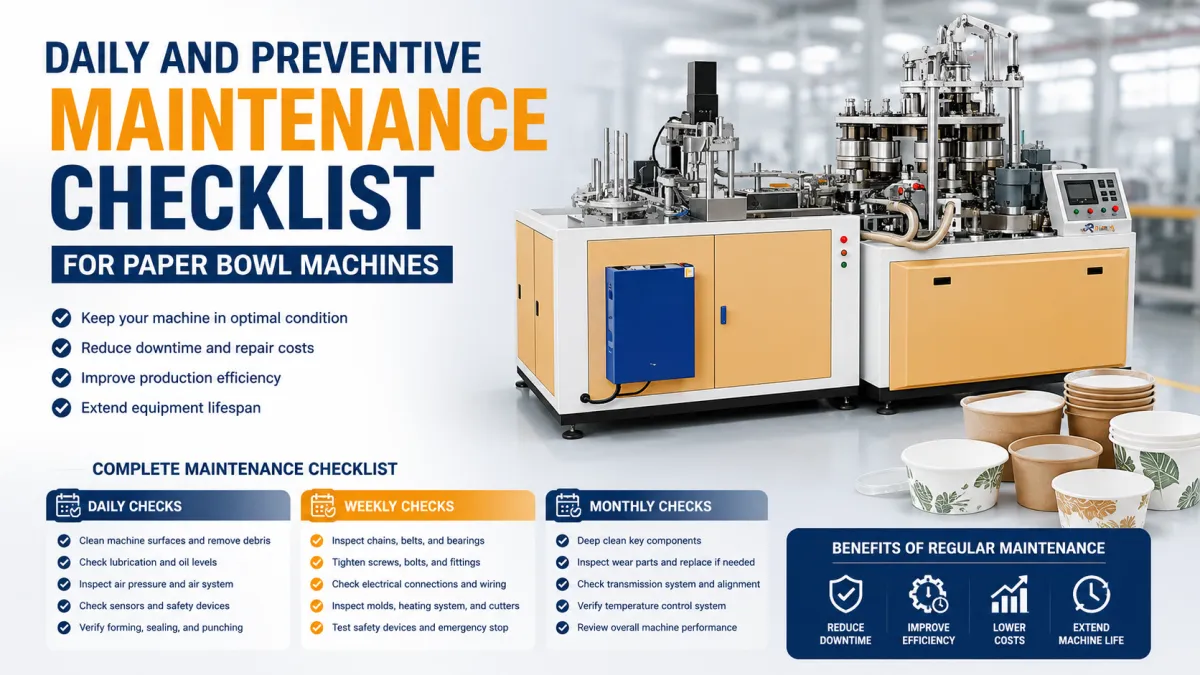
Implementing a preventive maintenance program provides measurable operational advantages throughout the machine's service life.
| Benefit | Operational Impact |
|---|---|
| Reduced Downtime | Identify wear before unexpected machine stoppages occur. |
| Longer Equipment Life | Protect critical mechanical and electrical components. |
| Improved Product Quality | Maintain consistent forming, sealing, and bowl dimensions. |
| Lower Maintenance Costs | Reduce emergency repairs and unplanned replacement expenses. |
| Higher Production Efficiency | Keep machines operating at stable production speeds. |
| Safer Operation | Detect loose components, air leaks, and electrical issues early. |
Factories that perform scheduled maintenance typically experience fewer production interruptions and more predictable manufacturing performance than those relying only on corrective repairs.
Daily Maintenance Checklist
The following inspection items should be completed before or after each production shift. Most checks require only a few minutes but can significantly reduce the risk of unexpected machine failures.
| Inspection Item | Recommended Action |
|---|---|
| Machine Cleaning | Remove paper dust, scraps, and debris from the machine surface and forming area. |
| Lubrication Points | Confirm that all scheduled lubrication points are properly serviced. |
| Air Pressure | Verify that pneumatic pressure remains stable throughout production. |
| Heating System | Check heating temperature and ensure consistent sealing performance. |
| Sensors | Clean optical sensors and verify accurate material detection. |
| Emergency Stop Devices | Confirm that all emergency stop buttons function correctly. |
| PLC Display | Review the control panel for warning messages or abnormal alarms. |
| Finished Bowl Quality | Inspect bowl shape, bottom sealing, and rim forming for consistency. |
Recording these inspections at the end of every production shift helps maintenance personnel identify recurring issues before they become major equipment failures.
Weekly Preventive Maintenance Checklist
Weekly maintenance focuses on mechanical systems that experience continuous movement during production. Regular inspection helps maintain machine accuracy and reduces long-term component wear.
| Component | Maintenance Task |
|---|---|
| Drive Chains | Inspect tension, lubrication, and overall wear condition. |
| Bearings | Listen for unusual noise and check operating temperature. |
| Transmission Belts | Inspect for cracks, slipping, or excessive wear. |
| Pneumatic System | Check hoses, fittings, and cylinders for air leakage. |
| Fasteners | Tighten bolts, screws, and mounting hardware where necessary. |
| Safety Guards | Verify that protective covers remain securely installed. |
Weekly inspections provide an opportunity to detect gradual mechanical wear that may not be visible during routine daily checks.
Why Maintenance Is Especially Important for Large Paper Bowls
Paper bowl machines often process larger diameters and heavier food-grade paper than standard paper cup equipment. Applications such as noodle bowls, soup bowls, and takeaway containers require stable heating, accurate forming pressure, and reliable bottom sealing to ensure consistent product quality.
Even small mechanical deviations can affect bowl shape, sealing performance, or dimensional accuracy during high-speed production. Regular maintenance helps maintain stable forming quality across different bowl sizes and production batches.
To explore equipment suitable for different production capacities and bowl sizes, visit our Paper Bowl Machines collection page for an overview of available machine configurations.
Monthly Preventive Maintenance Checklist
While daily and weekly inspections focus on routine operating conditions, monthly preventive maintenance provides a more comprehensive evaluation of the machine's mechanical, pneumatic, and electrical systems. These scheduled inspections help maintain long-term production stability and reduce the risk of unexpected equipment failures.
| Maintenance Area | Recommended Inspection |
|---|---|
| Electrical Cabinet | Inspect wiring, terminals, cooling fans, and electrical connections for signs of wear or overheating. |
| Servo Motors & Drives | Check operating status, mounting stability, and control accuracy according to the manufacturer's recommendations. |
| Gear Transmission | Inspect gears, shafts, and couplings for abnormal wear, lubrication condition, and alignment. |
| Pneumatic Components | Check air cylinders, valves, regulators, and filters for leakage or unstable pressure. |
| Lubrication System | Verify that all lubrication points receive sufficient lubricant and refill if necessary. |
| Machine Frame | Inspect the overall structure for loose fasteners, vibration, or signs of fatigue. |
Recording monthly inspection results allows maintenance teams to monitor equipment condition over time and identify gradual changes before they develop into production problems.
Critical Components That Require Regular Inspection
Several components have a direct influence on production efficiency, bowl quality, and machine reliability. Establishing regular inspection intervals for these systems helps reduce downtime and maintain consistent manufacturing performance.
| Component | Inspection Focus | Operational Impact |
|---|---|---|
| Heating System | Temperature consistency and heating efficiency | Stable bottom sealing and leak resistance |
| Forming Mold | Surface condition and dimensional accuracy | Consistent bowl shape and appearance |
| Bottom Forming Unit | Alignment and forming pressure | Reliable bottom sealing quality |
| Sensors | Cleanliness and detection accuracy | Stable automatic operation |
| Drive System | Belts, chains, bearings, and transmission | Smooth production and reduced vibration |
| Pneumatic System | Air pressure stability and leakage | Reliable forming performance |
Machines producing multiple bowl sizes should also verify mold positioning and forming accuracy whenever production changes from one specification to another.
Paper Bowl Machine Maintenance Record Template
Keeping a maintenance log helps factories monitor machine performance, schedule preventive servicing, and maintain consistent production quality. A simple maintenance record also improves communication between operators and maintenance personnel.
| Date | Inspection Item | Status | Corrective Action | Technician |
|---|---|---|---|---|
| ____ | Daily Cleaning | ✓ / ✗ | ________________ | ________ |
| ____ | Lubrication | ✓ / ✗ | ________________ | ________ |
| ____ | Heating System | ✓ / ✗ | ________________ | ________ |
| ____ | Pneumatic System | ✓ / ✗ | ________________ | ________ |
| ____ | Finished Bowl Inspection | ✓ / ✗ | ________________ | ________ |
Many manufacturers integrate maintenance records into their preventive maintenance program to improve equipment reliability and simplify future servicing.
Common Maintenance Mistakes That Increase Downtime
Unexpected production interruptions are often caused by avoidable maintenance errors rather than major mechanical failures. Identifying these problems early helps extend machine life and improve production efficiency.
- Skipping daily cleaning because production schedules are busy.
- Applying incorrect lubricants or lubricating components too infrequently.
- Ignoring unusual vibration, abnormal noise, or rising operating temperatures.
- Continuing production after warning alarms appear on the control panel.
- Failing to inspect molds after changing bowl sizes.
- Replacing worn components only after complete failure instead of during scheduled maintenance.
- Operating the machine without maintaining accurate maintenance records.
Developing standardized maintenance procedures helps minimize emergency repairs and supports consistent production throughout the equipment's operating life.
Choosing Equipment Designed for Easy Maintenance
When evaluating new production equipment, buyers should consider not only production speed but also how easily the machine can be inspected and maintained. Features such as accessible lubrication points, modular component design, stable transmission systems, and reliable electrical controls can significantly reduce routine maintenance time.
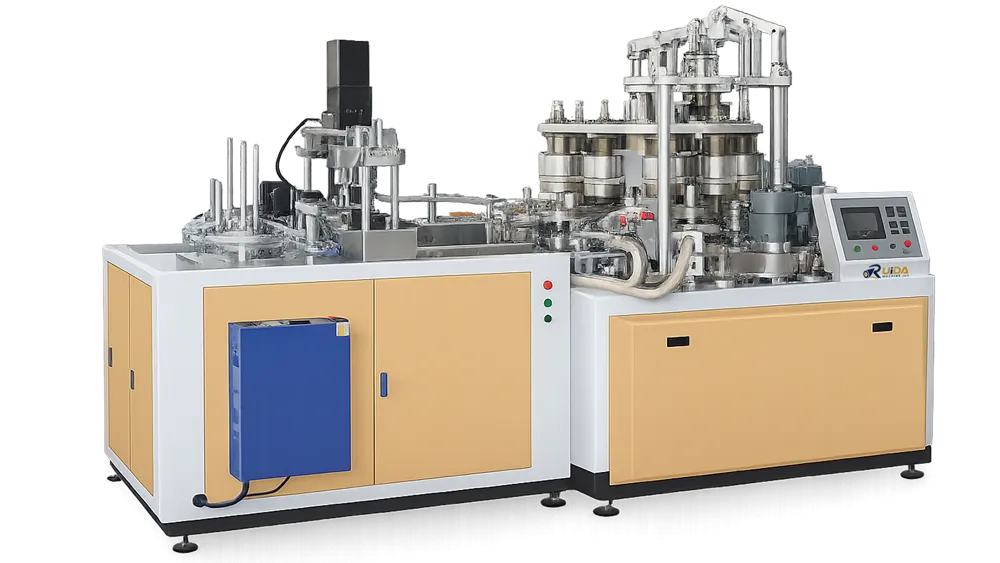
Our 24–46oz Paper Bowl Forming Machine (RD-XLF116W) is designed for commercial paper bowl production with a stable mechanical structure, convenient maintenance access, and flexible bowl size capability, making it suitable for manufacturers seeking reliable long-term operation.
Warning Signs Your Paper Bowl Machine Needs Service
Regular inspections help identify potential problems before they develop into costly equipment failures. If any of the following warning signs appear during production, maintenance should be scheduled as soon as possible to avoid unexpected downtime.
| Warning Sign | Possible Cause | Recommended Action |
|---|---|---|
| Increasing reject rate | Mold wear, unstable heating, or incorrect forming pressure | Inspect the forming system and verify machine settings. |
| Poor bottom sealing | Heating element performance or mold alignment issues | Check the heating system and bottom forming components. |
| Abnormal vibration or noise | Loose fasteners, worn bearings, or transmission wear | Inspect the drive system and replace worn components if necessary. |
| Frequent machine alarms | Sensor contamination, electrical faults, or control system errors | Review alarm information and inspect the affected components. |
| Unstable production speed | Pneumatic pressure fluctuation or transmission issues | Check the pneumatic system and mechanical transmission. |
| Visible oil or air leakage | Damaged seals, fittings, or pneumatic components | Repair leaks immediately to prevent further equipment damage. |
Responding quickly to these warning signs helps maintain consistent product quality while reducing the likelihood of major repairs.
How Preventive Maintenance Reduces Operating Costs
Preventive maintenance should be viewed as an investment rather than an operating expense. Regular inspections and scheduled servicing help reduce unexpected breakdowns, improve production efficiency, and extend the service life of the equipment.
| Without Preventive Maintenance | With Preventive Maintenance |
|---|---|
| Unexpected production stoppages | More stable production scheduling |
| Higher emergency repair costs | Lower long-term maintenance expenses |
| Greater material waste | Improved raw material utilization |
| Shorter component service life | Extended equipment lifespan |
| Inconsistent bowl quality | Stable forming and sealing performance |
| Reduced customer delivery reliability | Improved production consistency and on-time delivery |
For manufacturers operating multiple shifts or supplying large food packaging customers, preventive maintenance plays an important role in maintaining reliable production and controlling operating costs.
Frequently Asked Questions
How often should a paper bowl machine be maintained?
Basic cleaning and inspection should be performed every production shift. Weekly and monthly preventive maintenance should follow a planned schedule based on production hours and machine usage.
What is the most important daily maintenance task?
Keeping the machine clean, checking lubrication points, monitoring air pressure, and inspecting bowl quality are among the most important daily maintenance activities.
Which components wear out most frequently?
Heating elements, bearings, transmission belts, sensors, pneumatic seals, and forming molds typically require regular inspection and periodic replacement depending on production intensity.
Can preventive maintenance reduce production costs?
Yes. Preventive maintenance helps reduce downtime, minimizes emergency repairs, lowers material waste, and extends equipment service life, contributing to lower overall operating costs.
Should maintenance records be kept?
Yes. Recording inspections, repairs, and component replacements helps maintenance teams monitor equipment condition and plan future servicing more effectively.
When should molds be inspected?
Molds should be inspected regularly during scheduled maintenance and whenever production changes to a different bowl size or specification.
Does machine maintenance affect product quality?
Absolutely. Properly maintained equipment provides more consistent forming pressure, stable heating performance, accurate dimensions, and reliable bottom sealing, all of which contribute to higher-quality finished paper bowls.
How can buyers choose a machine that is easier to maintain?
Look for equipment with a robust mechanical structure, accessible maintenance points, reliable electrical components, standardized spare parts, and responsive technical support from the manufacturer.
Build a Reliable Maintenance Program for Long-Term Production Success
A well-planned preventive maintenance program helps paper bowl manufacturers achieve stable production, consistent product quality, and lower operating costs throughout the machine's service life. Regular inspections, accurate maintenance records, and timely replacement of wear components reduce the risk of unexpected downtime while protecting your equipment investment.
Whether your factory produces small food containers or large-capacity takeaway bowls, establishing standardized maintenance procedures is an essential part of efficient manufacturing management and long-term business growth.
For manufacturers producing large-capacity food packaging, our 28–190oz Paper Bucket Machine (RD-ZT-200) offers stable operation, heavy-duty forming capability, and flexible production for a wide range of paper bucket and large paper bowl applications.