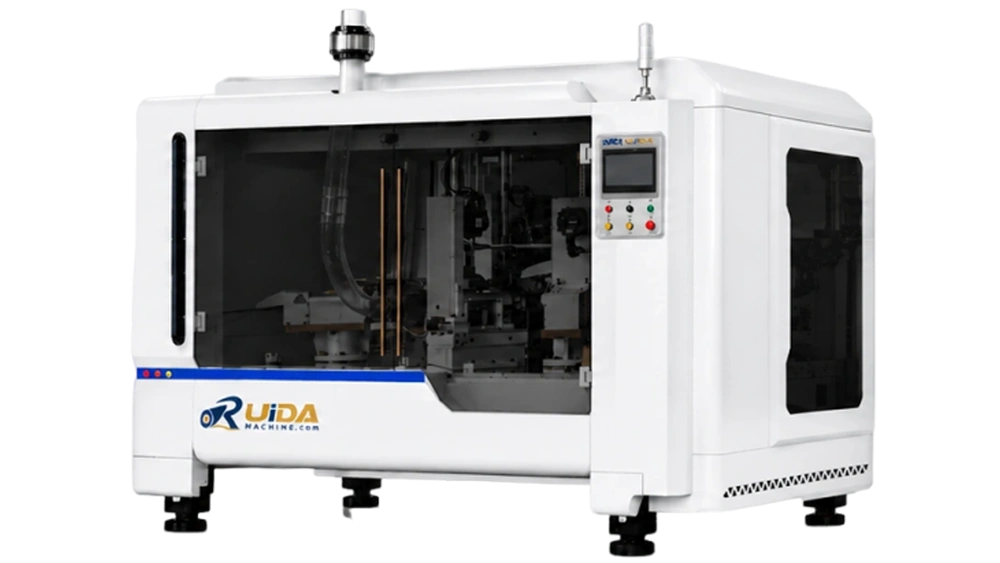

10 Common Paper Cup Machine Problems and Practical Fixes
For paper cup manufacturers, stable machine performance directly affects production efficiency, cup quality, material waste, delivery schedules, and long-term operating costs. When a paper cup machine has sealing problems, bottom leakage, paper jams, or unstable speed, even a short period of downtime can lead to significant production loss.
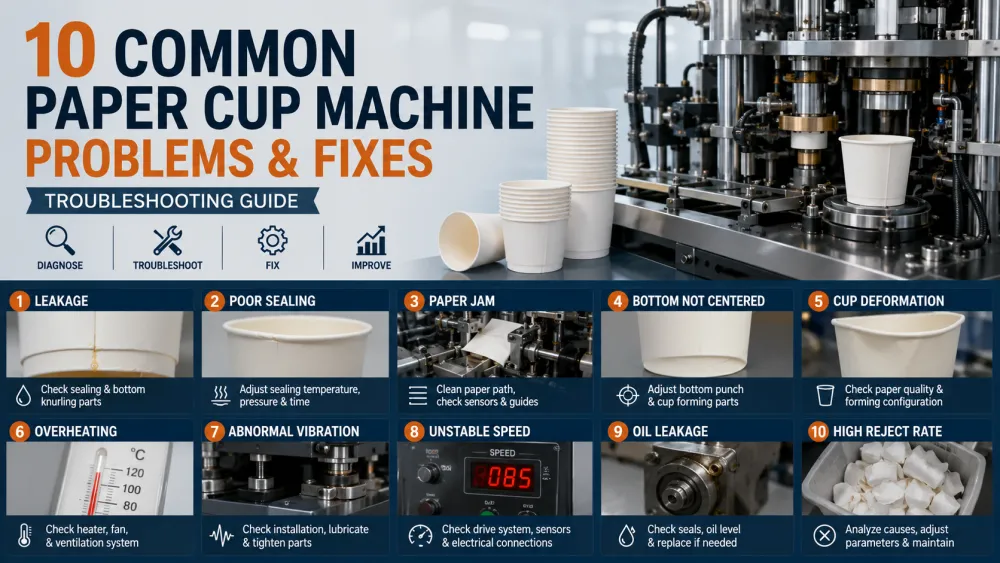
This troubleshooting guide explains 10 common paper cup machine problems, possible causes, practical solutions, and preventive maintenance tips. It is designed for paper cup factories, packaging producers, distributors, and purchasing teams who want to reduce downtime and keep production running smoothly.
Why Paper Cup Machine Troubleshooting Matters
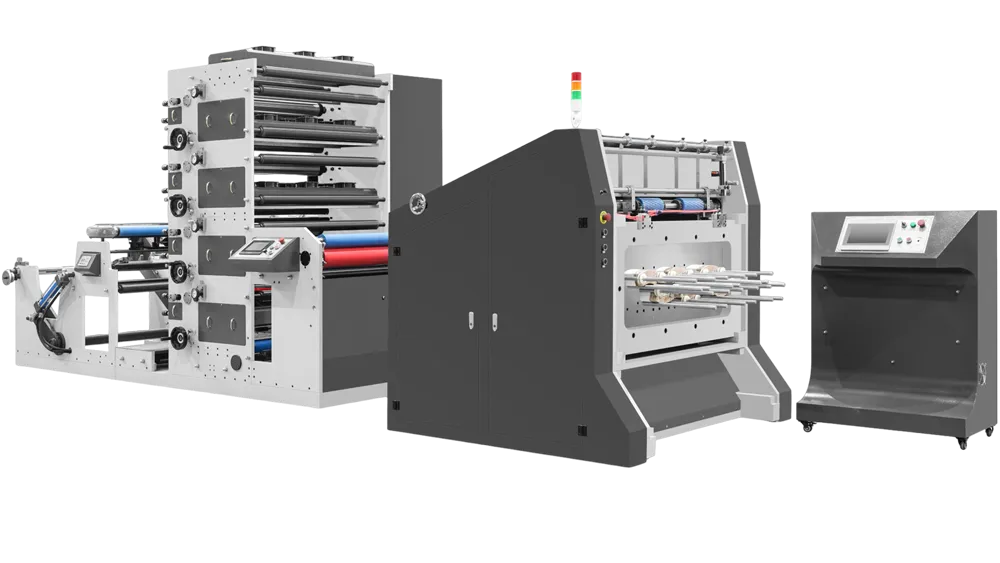
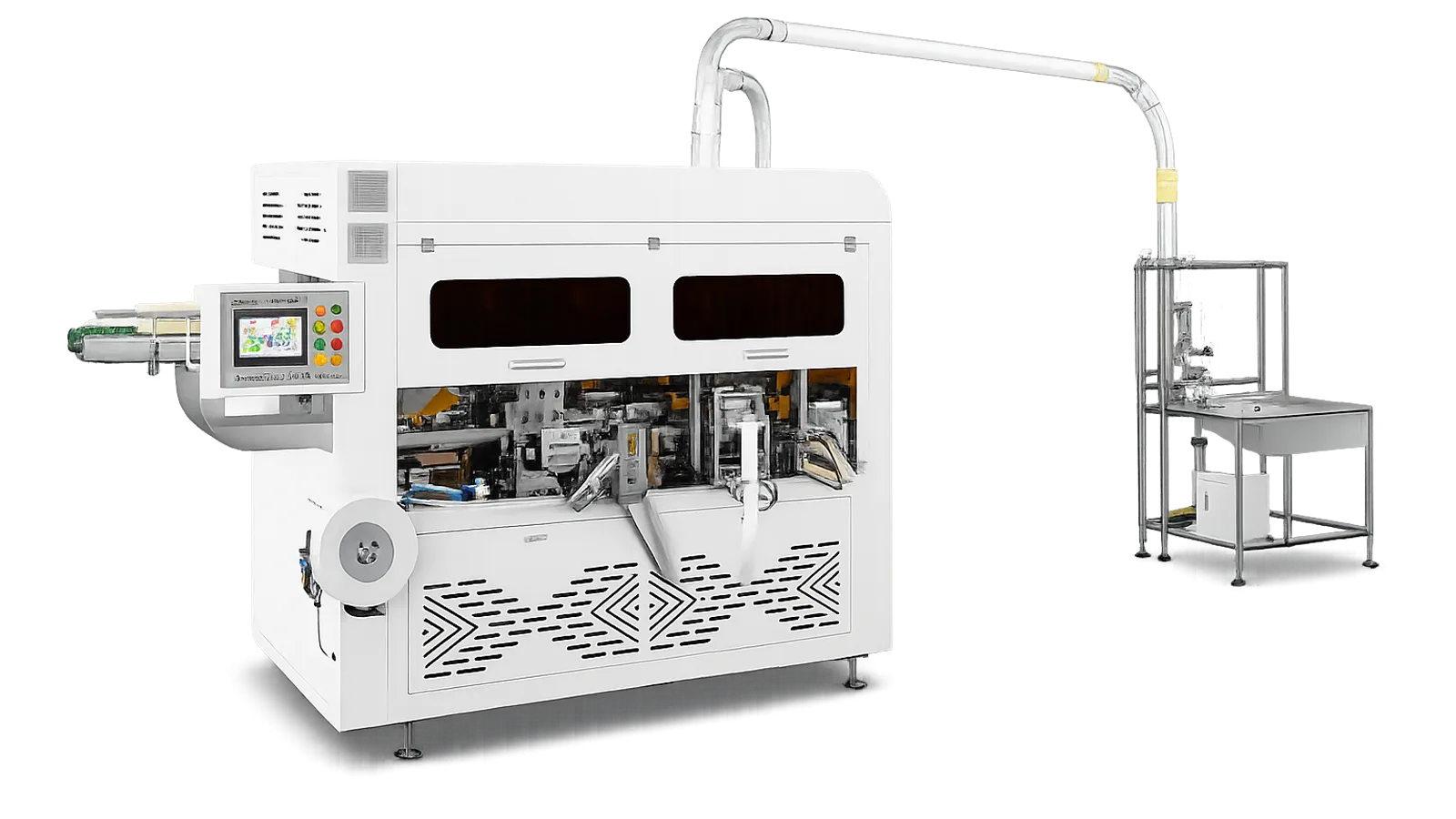
A paper cup forming machine is not just a single machine. It works together with paper cup printing, die cutting, cup forming, stacking, inspection, and packaging processes. If one section is unstable, the entire production line may be affected.
Common production problems often come from temperature settings, paper material quality, mold accuracy, feeding alignment, pneumatic pressure, sensor position, lubrication, or worn mechanical parts. Finding the real cause quickly helps reduce waste and avoid unnecessary part replacement.
Before purchasing a new paper cup machine, buyers should also understand these common issues. A reliable supplier should not only provide equipment, but also offer technical support, spare parts guidance, maintenance advice, and production troubleshooting experience.
1. Inconsistent Cup Sealing
Problem
The cup side seam does not seal properly. The cup body may open, curl, or show weak bonding after forming.
Possible Causes
- Incorrect side sealing temperature
- Uneven pressure on the sealing wheel or knurling wheel
- Unstable quality of PE-coated paper
- Paper surface contamination, moisture, or uneven coating
How to Fix It
- Check the side sealing heater temperature and adjust it according to the paper material.
- Adjust the sealing wheel pressure to ensure stable contact.
- Use uniform, food-grade PE-coated paper with consistent coating quality.
- Clean the sealing area regularly to avoid dust, paper residue, or carbon buildup.
For most PE-coated paper cup production, sealing temperature should be adjusted gradually based on paper thickness, coating type, machine speed, and actual sealing result. Avoid increasing temperature too aggressively, because overheating may cause wrinkles, burn marks, or paper deformation.
2. Cup Bottom Leakage
Problem
Finished paper cups leak from the bottom after water testing or during actual use.
Possible Causes
- Insufficient bottom heating temperature
- Weak bottom sealing pressure
- Bottom paper disc size does not match the cup mold
- Incorrect bottom folding or curling tension
- Heating plate surface is dirty or uneven
How to Fix It
- Increase bottom heating temperature gradually within the machine’s safe operating range.
- Confirm that the bottom disc diameter matches the cup size and mold specification.
- Check bottom paper feeding accuracy and folding position.
- Clean the heating plates regularly to keep heat transfer consistent.
- Inspect the bottom sealing mold and replace worn parts when necessary.
Bottom leakage is one of the most serious quality problems in paper cup production. If leakage appears frequently, do not only increase temperature. The real issue may be paper size, mold matching, pressure, material coating, or forming accuracy.
3. Excessive Waste or Paper Jamming
Problem
The machine frequently jams during feeding or forming, and the waste ratio becomes too high.
Possible Causes
- Fan-shaped paper blanks are not die cut accurately
- Cup design does not match the forming mold
- Paper feeding rollers are loose or worn
- Paper stack is not aligned properly
- Raw paper has curling, moisture, or uneven thickness
How to Fix It
- Check the die cutting template and confirm fan-shaped paper accuracy.
- Inspect feeding rollers and adjust the feeding pressure.
- Keep paper blanks flat, clean, and properly stacked before feeding.
- Use sharp and calibrated die-cutting molds for stable blank size.
- Check whether the cup design fits the machine mold and cup size range.
If paper jamming happens frequently, the problem may come from the upstream paper cup die cutting machine rather than the forming machine itself. Accurate die cutting is essential for smooth cup forming.
4. Motor Overheating or Tripping
Problem
The main drive motor becomes hot, trips, or stops during long production runs.
Possible Causes
- Poor lubrication of moving parts
- Machine running under excessive load
- Worn bearings, belts, or gears
- Voltage instability in the workshop
- Continuous high-speed operation without proper maintenance
How to Fix It
- Lubricate gears, chains, bearings, and transmission parts according to the maintenance schedule.
- Reduce machine speed temporarily if overheating occurs during peak production.
- Inspect motor bearings, belts, and drive parts for wear.
- Check workshop voltage and use a voltage stabilizer when necessary.
- Contact the machine supplier if overheating continues after basic inspection.
Motor overheating should not be ignored. Long-term overheating can shorten motor life and damage other transmission parts.
5. Irregular Cup Height or Cup Shape
Problem
Finished cups have uneven height, poor roundness, or inconsistent rim shape.
Possible Causes
- Cup wall paper feeding is misaligned
- Fan-shaped paper size varies between batches
- Forming mold is worn or not installed correctly
- Tension spring or guide track is damaged
- Printing and die cutting position is not accurate
How to Fix It
- Adjust the paper feeding position and guide track.
- Check fan-shaped paper dimensions before mass production.
- Replace damaged tension springs or forming dies.
- Calibrate the cup guide system for symmetrical forming.
- Check upstream printing and die cutting alignment.
When cup height or shape is unstable, the issue may not be caused by the forming machine alone. In many cases, paper printing, die cutting, and blank preparation accuracy also affect final cup shape. A stable paper cup printing machine helps improve registration and reduce later forming problems.
6. Holes or Wrinkles on the Cup Body
Problem
Finished cups show pinholes, wrinkles, burn marks, or visible deformation on the cup wall.
Possible Causes
- Side sealing temperature is too high
- Mechanical pressure is excessive
- Paper moisture content is unstable
- Paper material is stored in a poor environment
- Coated paper quality is not suitable for high-speed forming
How to Fix It
- Reduce sealing temperature gradually and test bonding quality.
- Adjust side pressure to avoid excessive compression.
- Store paper material in a controlled environment.
- Keep paper away from moisture, dust, and direct sunlight.
- Test raw material before large-scale production.
For better forming stability, paper material should be stored under suitable humidity and temperature conditions. Excessively dry or moist paper can both create forming defects.
7. Machine Stops After a Few Minutes
Problem
The machine starts normally but stops automatically after running for a short time.
Possible Causes
- Sensor misalignment or dust blockage
- Emergency stop switch is triggered
- Limit switch signal error
- PLC alarm or electrical control fault
- Paper feeding or cup ejection blockage detected by the system
How to Fix It
- Check all sensors, photoelectric switches, and limit switches.
- Clean dust or paper residue around sensor heads.
- Reset the emergency stop button and check the safety circuit.
- Review the PLC alarm code or HMI warning message.
- Contact the manufacturer for remote diagnosis if the error cannot be cleared.
Automatic stoppage is often a protective function. Instead of bypassing the alarm, operators should identify the reason and solve the root cause.
8. Noise and Vibration During Operation
Problem
The machine produces abnormal noise, vibration, or shaking during production.
Possible Causes
- Worn bearings, chains, belts, or gears
- Loose bolts or structural fixtures
- Forming mold is not balanced
- Insufficient lubrication
- Machine foundation is not level
How to Fix It
- Inspect and tighten major bolts and fixtures weekly.
- Apply grease to gears, chains, and other moving parts.
- Replace worn belts, bearings, or transmission components.
- Check forming mold concentricity and installation accuracy.
- Ensure the machine is installed on a stable and level floor.
Abnormal noise is usually an early warning sign. Regular inspection can prevent small mechanical problems from becoming serious breakdowns.
9. Incomplete Cup Ejection or Discharge Blockage
Problem
Finished cups do not discharge smoothly, causing blockage in the ejection, stacking, or collection section.
Possible Causes
- Pneumatic ejection pressure is too low
- Cup stacker is misaligned
- Discharge belt or tray position is incorrect
- Dust or cup residue builds up in the stacking channel
- Finished cup shape is unstable, affecting stacking
How to Fix It
- Check pneumatic pressure and adjust it slightly if needed.
- Clean the stacking channel and discharge area regularly.
- Adjust the discharging belt, tray, or guide plate position.
- Inspect whether cup size and cup shape are stable.
- Check whether the stacking unit matches the production speed.
Cup discharge problems are especially common during high-speed production. The forming, ejection, and stacking sections must work together smoothly.
10. Inconsistent Production Speed
Problem
The actual production speed fluctuates or drops below the set value during operation.
Possible Causes
- Worn gears, belts, or transmission parts
- Paper feeding tension is unstable
- Voltage fluctuation in the workshop
- Machine load is too high
- PLC, servo, or control system needs calibration
How to Fix It
- Inspect and replace aging gears, belts, or mechanical drive parts.
- Check paper feeding tension and material alignment.
- Use an automatic voltage regulator if power supply is unstable.
- Run machine calibration according to the operation manual.
- Contact technical support if control system adjustment is required.
Speed stability depends on mechanical condition, paper feeding accuracy, electrical stability, and operator setup. Running at the highest possible speed is not always the best choice if the material, mold, or workshop conditions are not stable.
Preventive Maintenance Checklist for Paper Cup Machines
Preventive maintenance is the best way to reduce downtime and extend machine service life. The following checklist can help operators create a basic maintenance routine.
| Maintenance Task | Suggested Frequency | Purpose |
|---|---|---|
| Lubricate gears, chains, bearings, and moving parts | Every 48 hours or according to machine manual | Reduce friction, wear, noise, and overheating |
| Clean heating plates and sealing units | Weekly | Prevent carbon buildup and uneven heat transfer |
| Check sensors and photoelectric switches | Weekly to monthly | Avoid false alarms, missed feeding, or automatic stoppage |
| Inspect belts, bearings, and transmission parts | Monthly | Prevent sudden failure during production |
| Check pneumatic pressure and air supply | Weekly | Ensure stable cup ejection and machine movement |
| Verify cup mold and guide track alignment | When changing cup size or after long operation | Maintain cup height, shape, and sealing accuracy |
| Test raw paper before mass production | Each new material batch | Reduce sealing failure, leakage, and forming defects |
When Should You Contact the Machine Manufacturer?
Some problems can be solved by basic adjustment, cleaning, lubrication, or operator training. However, buyers and factory managers should contact the machine manufacturer when problems continue after normal troubleshooting.
You should request technical support if you experience:
- Repeated bottom leakage after temperature and pressure adjustment
- Frequent PLC alarms or electrical control errors
- Severe vibration, abnormal noise, or motor overheating
- Speed instability that cannot be solved by material or voltage checks
- Continuous paper jamming after die cutting and feeding inspection
- Need for mold change, spare parts replacement, or production line upgrade
For global buyers and distributors, after-sales response is a key factor when choosing a paper cup machine supplier. Reliable technical support can help factories reduce downtime, train operators faster, and improve long-term production stability.
How Ruida Machinery Supports Paper Cup Producers
Zhejiang Ruida Machinery provides paper cup forming equipment, production line solutions, technical guidance, spare parts support, and machine selection advice for packaging manufacturers worldwide.
For new factories, Ruida can help evaluate cup size, production speed, paper material, layout planning, and machine configuration. For existing factories, our team can support troubleshooting, maintenance planning, mold replacement, and production efficiency improvement.
Whether you are producing single wall paper cups, double wall cups, ripple cups, coffee cups, tea cups, or custom paper cup products, stable machine operation is essential for long-term production success.
FAQ: Paper Cup Machine Troubleshooting
Why does my paper cup machine produce leaking cups?
Paper cup leakage is usually caused by insufficient bottom heating, weak sealing pressure, incorrect bottom paper size, poor PE coating quality, or dirty heating plates. Check temperature, pressure, mold matching, and raw material quality before replacing major parts.
Why is the side seam of the paper cup opening?
Side seam opening usually happens when the side sealing temperature is too low, sealing pressure is uneven, or the PE-coated paper does not bond properly. Adjust the heater temperature gradually and check the sealing wheel pressure.
Why does my paper cup machine keep jamming?
Frequent jamming may come from inaccurate fan-shaped paper blanks, poor paper alignment, loose feeding rollers, paper curling, or a cup design that does not match the mold. Check both the forming machine and the die cutting process.
How often should a paper cup machine be lubricated?
Lubrication frequency depends on machine model and production intensity. As a general routine, gears, chains, bearings, and moving parts should be lubricated regularly according to the operation manual. High-speed machines usually require more frequent inspection.
What causes unstable paper cup machine speed?
Unstable speed may be caused by worn gears or belts, unstable paper feeding tension, voltage fluctuation, excessive machine load, or control system calibration issues.
Can poor paper material cause machine problems?
Yes. Low-quality or unstable PE-coated paper can cause sealing failure, leakage, wrinkles, feeding problems, and unstable cup forming. Material quality should always be checked before mass production.
Should I increase temperature when paper cups do not seal well?
Not always. Low temperature can cause weak sealing, but too much heat may cause wrinkles, burn marks, or deformation. Temperature, pressure, paper coating, and machine speed should be adjusted together.
When should I replace paper cup machine parts?
Parts should be replaced when they show clear wear, deformation, abnormal noise, unstable movement, or repeated production defects after normal adjustment. Common replacement parts include belts, bearings, springs, gears, heaters, sensors, and molds.
Final Thoughts
Most paper cup machine problems can be reduced through correct setup, stable raw materials, regular maintenance, and timely troubleshooting. For factories and distributors, understanding common problems helps improve production efficiency, reduce waste, and protect machine service life.
If your paper cup machine is experiencing sealing failure, bottom leakage, paper jams, abnormal vibration, unstable speed, or discharge blockage, Ruida Machinery can help you analyze the cause and recommend practical solutions.
Need technical support, spare parts guidance, or a more reliable paper cup production line? Contact Ruida Machinery for professional assistance.