Machine Installation and Production Startup Guide
Purchasing a paper cup machine is only the beginning of your production journey. What happens after the machine arrives at your factory is equally important. Proper installation, commissioning, operator training, and production planning all contribute to stable operation and long-term profitability.
For many first-time investors, distributors, and packaging manufacturers, the installation process can seem complicated. Questions such as "How long does installation take?", "What should we prepare before delivery?", and "When can we begin mass production?" are common.
The good news is that with proper preparation and technical guidance, most paper cup production lines can move from delivery to trial production within just a few days.
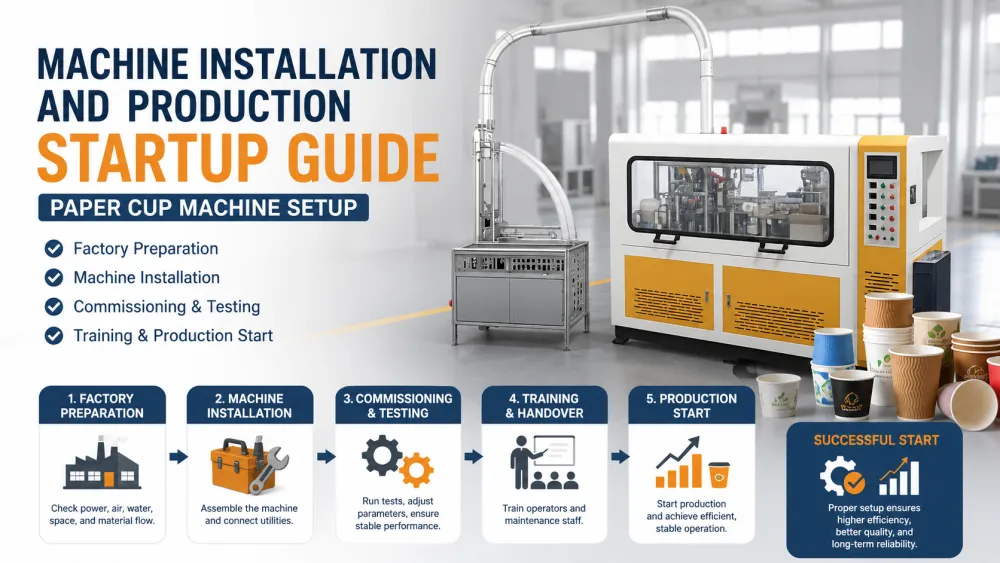
This guide explains the complete process—from factory preparation and machine installation to commissioning, operator training, and production startup—helping buyers reduce delays and begin production with confidence.
What Happens After Your Paper Cup Machine Arrives?
Once the machine reaches your factory, the focus shifts from transportation to production readiness. Every stage should be completed in sequence to ensure the equipment performs as designed.
A typical project follows this workflow:
| Stage | Main Activities |
|---|---|
| Machine Delivery | Unload, inspect packaging, verify accessories |
| Factory Preparation | Power supply, compressed air, workspace inspection |
| Machine Positioning | Place and level the equipment |
| Electrical Connection | Connect power, control cabinet, safety inspection |
| Mechanical Inspection | Lubrication, fasteners, transmission systems |
| Commissioning | Parameter adjustment and functional testing |
| Trial Production | Produce sample cups and optimize settings |
| Operator Training | Daily operation and maintenance instruction |
| Mass Production | Begin normal manufacturing |
Following this sequence minimizes installation problems and helps achieve stable production more quickly.
Factory Preparation Checklist Before Installation
Proper preparation before the machine arrives can significantly reduce installation time. Many startup delays are caused not by the equipment itself but by incomplete factory readiness.
Before delivery, buyers should confirm the following:
| Preparation Item | Recommendation |
|---|---|
| Power Supply | Matches machine voltage and frequency requirements |
| Compressed Air | Stable air pressure with sufficient capacity |
| Factory Floor | Level, clean, and capable of supporting machine weight |
| Lighting | Adequate for machine operation and maintenance |
| Material Storage | Dry storage area for PE-coated paper rolls |
| Finished Product Area | Space for cup collection and packaging |
| Forklift or Lifting Equipment | Available for unloading heavy machinery |
| Operator Availability | Personnel ready for installation training |
Completing these preparations before delivery helps avoid unnecessary waiting time once the equipment reaches your factory.
Preparing Raw Materials Before Trial Production
One of the most common reasons for installation delays is that the machine arrives before the production materials. Even after installation is complete, trial production cannot begin without the correct raw materials.
Before commissioning, prepare:
- PE-coated paper rolls
- Bottom paper rolls
- Appropriate cup molds
- Packaging materials
- Compressed air supply
- Cleaning tools and lubricants
If multiple cup sizes will be produced, confirm that the corresponding mold sets are available before installation begins.
Machine Installation Step by Step
After the machine has been positioned, installation typically follows a structured sequence to ensure every mechanical and electrical system is operating correctly before production starts.
Step 1 – Position and Level the Machine
The machine should be installed on a stable, level floor to minimize vibration during high-speed operation. Proper leveling improves forming accuracy and extends component life.
Step 2 – Connect Electrical Power
Qualified personnel should connect the machine according to the electrical specifications provided by the manufacturer. Voltage, frequency, grounding, and safety protection should all be verified before powering on the equipment.
Step 3 – Connect the Pneumatic System
Compressed air should be connected and adjusted to the recommended operating pressure. Stable air pressure is essential for reliable feeding, forming, and cup discharge.
Step 4 – Perform Mechanical Inspection
Before startup, engineers inspect lubrication points, drive chains, sensors, heating units, fasteners, and transmission systems to confirm that the machine is ready for commissioning.
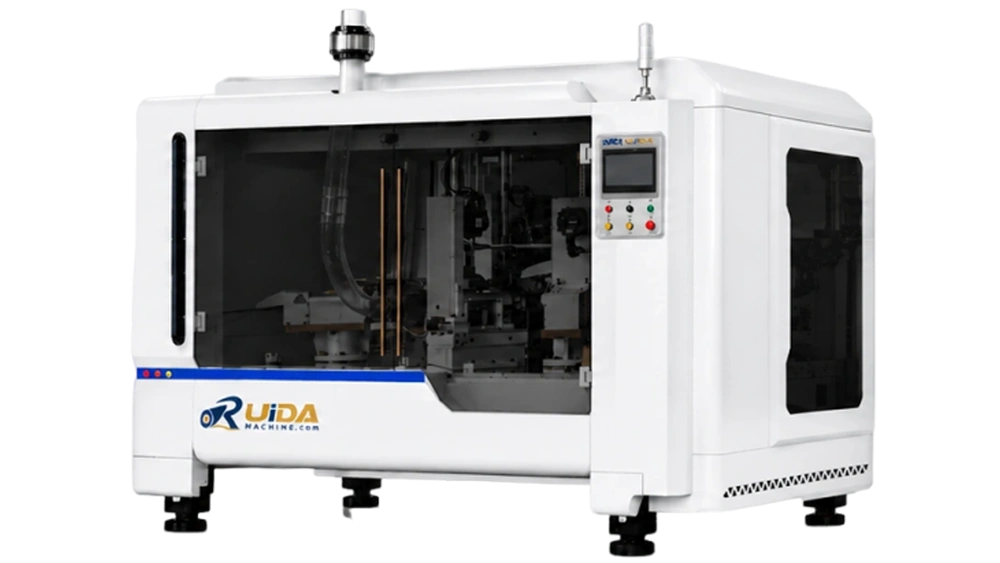
For buyers comparing different machine configurations, our Paper Cup Machines page provides an overview of available production capacities and equipment options for various manufacturing requirements.
Machine Commissioning: Preparing for Stable Production
Machine installation is only the first step. Before normal production begins, the equipment must be carefully commissioned to ensure every mechanical, electrical, pneumatic, and heating system operates correctly under production conditions.
Commissioning is not simply turning on the machine—it is a systematic process of verifying machine performance, optimizing operating parameters, and confirming that finished paper cups meet quality standards.
Typical commissioning activities include:
- Checking lubrication of all moving components
- Testing electrical and PLC systems
- Verifying servo motor synchronization (where applicable)
- Adjusting heating temperatures
- Testing pneumatic pressure stability
- Checking cup feeding and bottom paper feeding accuracy
- Verifying cup ejection and collection systems
- Producing trial samples for quality inspection
Only after all systems operate consistently should mass production begin.
What Our Engineers Do During Installation and Commissioning
Professional installation involves much more than assembling equipment. Experienced engineers help ensure the machine reaches stable production as quickly as possible while minimizing unnecessary downtime.
| Service | Purpose |
|---|---|
| Machine Positioning | Ensure stable installation and proper machine leveling |
| Electrical Inspection | Verify safe power connection and electrical protection |
| Pneumatic Adjustment | Optimize air pressure for stable operation |
| Heating Calibration | Set suitable temperatures for different paper materials |
| Mold Installation | Install and adjust cup molds correctly |
| Parameter Optimization | Fine-tune machine settings for production stability |
| Sample Cup Inspection | Verify sealing, dimensions, and appearance |
| Operator Training | Teach operation, maintenance, and troubleshooting |
This commissioning process helps operators understand not only how to run the machine but also how to maintain stable production over the long term.
Production Startup Checklist
Before switching from trial production to normal manufacturing, operators should complete a final production readiness inspection.
| Checkpoint | Status |
|---|---|
| Machine installation completed | □ |
| Electrical system tested | □ |
| Compressed air pressure stable | □ |
| Heating temperatures verified | □ |
| Paper feeding adjusted correctly | □ |
| Bottom paper feeding synchronized | □ |
| Cup molds installed securely | □ |
| Sample cups approved | □ |
| Operators trained | □ |
| Safety inspection completed | □ |
Using a standardized startup checklist helps reduce startup errors and ensures consistent production quality from the first production batch.
Typical Installation Timeline
Although every factory is different, a well-prepared project generally follows a predictable installation schedule.
| Project Stage | Typical Time |
|---|---|
| Machine Delivery & Inspection | Day 1 |
| Machine Positioning | Day 1 |
| Electrical & Air Connection | Day 1–2 |
| Machine Commissioning | Day 2 |
| Trial Production | Day 3 |
| Operator Training | Day 3–4 |
| Normal Production | Day 4–5 |
Projects with complete factory preparation and available raw materials often reach commercial production within the first week after machine delivery.
Common Startup Problems and How to Avoid Them
Most startup issues are not caused by machine defects but by incorrect settings, unsuitable raw materials, or insufficient operator experience. Identifying these issues early helps prevent unnecessary downtime.
| Common Issue | Possible Cause | Recommended Action |
|---|---|---|
| Poor Cup Sealing | Incorrect heating temperature | Adjust heater settings and verify paper specifications |
| Paper Feeding Problems | Improper roll alignment or tension | Re-adjust paper feeding system |
| Cup Shape Inconsistency | Mold adjustment required | Inspect mold positioning and forming parameters |
| Machine Stops Unexpectedly | Sensor or safety protection activated | Check alarms and sensor alignment |
| Bottom Paper Misalignment | Feeding synchronization issue | Recalibrate bottom paper feeding system |
| Higher Reject Rate | Parameters not optimized | Fine-tune machine settings after trial production |
Operators should avoid increasing production speed immediately after installation. Stable operation at moderate speed allows engineers to verify machine performance before reaching full production capacity.
Preparing Operators for Long-Term Success
Even the most advanced paper cup machine depends on well-trained operators. Proper training reduces production waste, improves equipment utilization, and extends machine service life.
A complete operator training program should include:
- Machine startup and shutdown procedures
- Daily operation and production monitoring
- Mold replacement procedures
- Heating and pressure adjustment
- Quality inspection of finished cups
- Routine cleaning and lubrication
- Basic troubleshooting techniques
- Safety procedures during operation and maintenance
After production begins, establishing a preventive maintenance routine is equally important. Following a structured maintenance schedule helps maintain stable production efficiency and reduces the likelihood of unexpected downtime.
For recommended daily inspection procedures, refer to our Daily Maintenance Checklist for Optimal Paper Cup Machine Performance.
On-Site Installation or Remote Technical Support?
Every paper cup production project is different, so the most suitable installation method depends on the buyer's technical experience, project schedule, and local resources.
Today, many manufacturers offer both on-site commissioning and remote technical assistance. For experienced factories expanding an existing production line, remote guidance may be sufficient. For first-time investors or complete production line installations, on-site engineering support is often recommended.
| Support Option | Suitable For | Main Advantages |
|---|---|---|
| Remote Technical Support | Experienced manufacturers | Fast response, lower overall project cost |
| On-Site Installation | New factories and first-time buyers | Hands-on commissioning, operator training, faster production startup |
| Hybrid Support | International production projects | Remote preparation followed by on-site optimization when required |
Choosing the appropriate support model helps shorten installation time while ensuring the machine reaches stable production as quickly as possible.
How Long Before Full Production Capacity Is Reached?
Many buyers expect a newly installed machine to immediately operate at maximum speed. In practice, successful production startup follows a gradual optimization process.
During the first several days of operation, engineers and operators typically focus on:
- Verifying machine stability
- Fine-tuning production parameters
- Monitoring finished cup quality
- Reducing material waste
- Improving operator familiarity
As operators gain experience and machine parameters are optimized, production efficiency generally increases while reject rates continue to decrease.
Rather than pursuing maximum speed immediately, most manufacturers recommend achieving consistent quality first and then gradually increasing production capacity.
Factory Readiness Scorecard
Before scheduling machine delivery, use the following checklist to evaluate whether your factory is fully prepared for installation and production startup.
| Preparation Item | Status |
|---|---|
| Production area prepared | □ Ready |
| Electrical supply confirmed | □ Ready |
| Compressed air system installed | □ Ready |
| PE-coated paper delivered | □ Ready |
| Cup molds available | □ Ready |
| Operators assigned | □ Ready |
| Packaging materials prepared | □ Ready |
| Quality inspection equipment available | □ Ready |
| Maintenance tools prepared | □ Ready |
| Production schedule confirmed | □ Ready |
Completing these preparations before delivery significantly reduces project delays and allows production to begin sooner.
Typical Paper Cup Machine Project Timeline
Every production project is unique, but most paper cup manufacturing facilities follow a similar implementation schedule. The actual timeline depends on machine configuration, production capacity, shipping destination, factory readiness, and local installation conditions.
The following example illustrates a typical project from purchase confirmation to commercial production.
| Project Stage | Typical Duration | Main Activities |
|---|---|---|
| Order Confirmation | 1–3 Days | Finalize machine configuration, cup sizes, molds, and commercial terms. |
| Machine Manufacturing | 20–45 Days | Production, assembly, factory testing, and quality inspection. |
| International Shipping | 15–40 Days | Ocean or land transportation depending on destination country. |
| Factory Preparation | Before Machine Arrival | Prepare electrical power, compressed air, installation space, raw materials, and operators. |
| Machine Installation | 1–2 Days | Machine positioning, leveling, electrical connection, and mechanical inspection. |
| Commissioning & Trial Production | 1–2 Days | Parameter adjustment, sample cup production, and quality verification. |
| Operator Training | 1–2 Days | Daily operation, maintenance, mold replacement, and troubleshooting training. |
| Commercial Production | Within the First Week | Begin stable production while gradually optimizing speed and efficiency. |
Projects with complete factory preparation and timely material delivery can often begin commercial paper cup production within the first week after machine installation. Careful planning before delivery helps minimize delays and accelerates the return on investment.
Frequently Asked Questions
How long does it take to install a paper cup machine?
Installation time depends on machine configuration and factory readiness. Most standard projects can complete installation, commissioning, and trial production within several days when the site is properly prepared.
Do I need experienced operators before installation?
Previous experience is helpful but not essential. Most manufacturers provide operator training during installation so production staff can learn machine operation, routine maintenance, and basic troubleshooting.
Can one engineer complete the installation?
For many standard machines, installation can be completed by one experienced engineer working together with local operators and electricians. Larger production lines may require additional technical personnel.
What should be prepared before the machine arrives?
Buyers should prepare electrical power, compressed air, factory space, raw materials, operators, lifting equipment, and packaging materials before delivery to avoid unnecessary delays.
When can commercial production begin?
After installation, commissioning, and successful trial production are completed, factories can gradually transition into normal commercial production while continuing to optimize machine settings.
Can production start immediately at maximum speed?
It is generally recommended to begin production at moderate speed while verifying machine stability and product quality. Production speed can then be increased gradually as operators become familiar with the equipment.
What if technical issues occur after installation?
Most professional manufacturers provide remote technical support and troubleshooting assistance. Depending on the project, on-site service may also be available when necessary.
Why is operator training so important?
Well-trained operators improve production efficiency, reduce material waste, minimize machine downtime, and help maintain consistent paper cup quality throughout long-term production.
From Installation to Profitable Production
A successful paper cup production project is built on much more than purchasing the right equipment. Careful factory preparation, professional installation, systematic commissioning, and effective operator training all contribute to stable production and long-term profitability.
For global distributors, trading companies, and factory investors, understanding the complete startup process also makes it easier to support customers, answer technical questions, and recommend suitable production solutions with greater confidence.
Whether you are installing your first paper cup machine or expanding an existing production facility, following a structured installation and startup process helps reduce risk, shorten the time to production, and maximize the return on your equipment investment.
For buyers planning high-speed production projects, our RD-XLF200BF Servo Paper Cup Machine offers advanced automation, stable high-speed operation, and is designed to support efficient commercial paper cup manufacturing from initial commissioning through long-term production.