Which Spare Parts Should Buyers Keep in Stock?
Investing in a paper cup machine is only part of building a reliable production operation. An equally important consideration is planning an appropriate spare parts inventory. Keeping the right replacement components on hand helps minimize unexpected downtime, shortens repair time, and ensures continuous production when normal wear occurs.
For international buyers, spare parts planning is even more important. Shipping replacement components across countries may take days or even weeks, making it essential to prepare a basic inventory before production begins.
Rather than purchasing large quantities of every component, successful manufacturers focus on stocking high-wear and production-critical parts that are most likely to require replacement during normal operation.
Why Spare Parts Planning Matters
Every production machine contains components with different service lives. Some parts are designed to operate for many years, while others naturally wear over time and require periodic replacement.
Without a spare parts strategy, a relatively inexpensive component can unexpectedly stop an entire production line. A small investment in preventive spare parts inventory often prevents much larger production losses.
| Without Spare Parts Planning | With Spare Parts Planning |
|---|---|
| Unexpected production downtime | Fast component replacement |
| Waiting for international shipments | Continuous production |
| Emergency purchasing costs | Lower maintenance expenses |
| Higher production risk | More predictable maintenance planning |
| Longer machine stoppages | Improved equipment availability |
For factories operating high-volume production, maintaining essential spare parts is a practical way to improve production reliability and reduce the overall cost of ownership.
Consumable Parts vs Long-Life Components
Not every machine component requires replacement at the same frequency. Understanding the difference between consumable parts and long-life components helps buyers prioritize their spare parts budget.
| Consumable Parts | Long-Life Components |
|---|---|
| Heating elements | Machine frame |
| Bearings | Main shafts |
| Drive belts | Servo motors |
| Pneumatic seals | Gearboxes |
| Sensors | Electrical cabinet structure |
| Drive chains | Major transmission assemblies |
Consumable parts experience normal wear during production and should be inspected regularly. Long-life components typically require only routine inspection unless abnormal operating conditions occur.
Which Spare Parts Should Every Factory Keep?
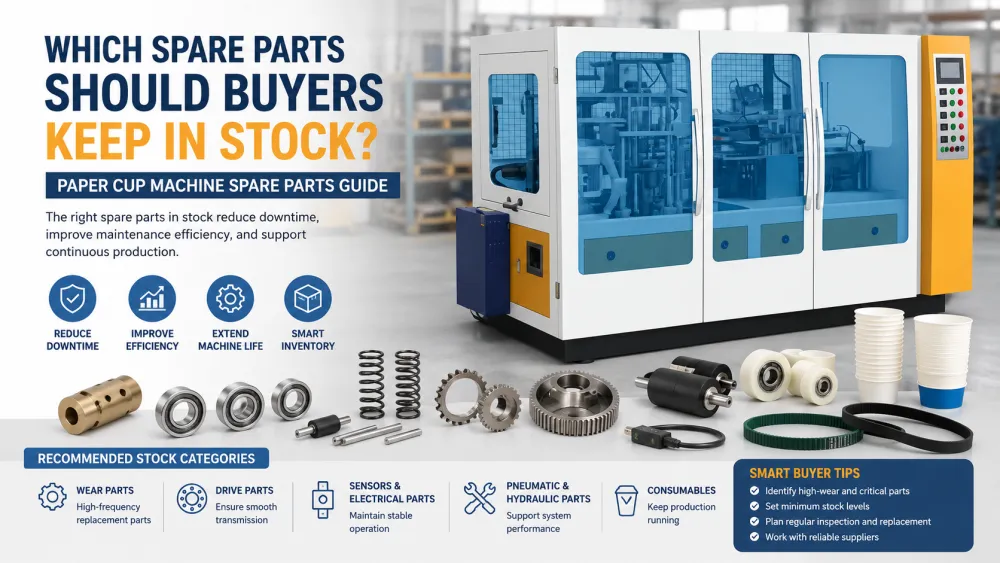
Although the exact spare parts inventory depends on machine configuration and production volume, most paper cup manufacturers should maintain a basic inventory of high-priority replacement components.
| Spare Part | Primary Function | Priority |
|---|---|---|
| Heating Elements | Cup side and bottom sealing | ★★★★★ |
| Sensors | Machine detection and positioning | ★★★★★ |
| Bearings | Support rotating components | ★★★★★ |
| Pneumatic Seals | Maintain stable air pressure | ★★★★☆ |
| Drive Chains | Mechanical transmission | ★★★★☆ |
| Belts | Power transmission | ★★★★☆ |
| Electrical Fuses | Electrical protection | ★★★☆☆ |
| Lubricants | Routine maintenance | ★★★★★ |
Keeping these commonly used replacement parts available allows maintenance personnel to restore production quickly without waiting for replacement shipments.
Critical Components That Can Stop Production
Some machine components have a much greater impact on production than others. If these parts fail unexpectedly and no replacements are available, production may stop immediately.
| Component | If It Fails... | Production Impact |
|---|---|---|
| Heating Element | Cups cannot be sealed properly | Very High |
| Sensor | Machine stops automatically | Very High |
| Bearing | Abnormal vibration and mechanical wear | High |
| Pneumatic Seal | Air leakage affects forming quality | Medium |
| Drive Chain | Transmission becomes unstable | High |
Understanding which components have the greatest impact on production helps buyers prioritize both maintenance planning and spare parts purchasing.
When selecting reliable production equipment, buyers can also compare different machine configurations on our Paper Cup Machines page to understand how machine design influences long-term maintenance requirements.
Recommended First Spare Parts Package
When purchasing a new paper cup machine, many buyers choose to order an initial spare parts package together with the equipment. This approach helps reduce future shipping costs, shortens maintenance response time, and ensures that commonly worn components are immediately available if replacement becomes necessary.
Rather than purchasing every available component, the initial package should focus on parts that experience normal wear during production or have the greatest impact on machine operation.
| Spare Part Category | Recommendation | Reason |
|---|---|---|
| Heating Elements | Highly Recommended | Essential for reliable cup side and bottom sealing. |
| Sensors | Highly Recommended | Support stable machine detection and automatic operation. |
| Bearings | Recommended | Reduce downtime caused by normal mechanical wear. |
| Pneumatic Seals | Recommended | Maintain stable air pressure and forming consistency. |
| Drive Chains & Belts | Recommended | Support continuous transmission performance. |
| Electrical Fuses & Small Components | Recommended | Allow quick replacement during electrical troubleshooting. |
Discussing the recommended spare parts package with the equipment manufacturer before shipment helps ensure the inventory matches the selected machine configuration and expected production volume.
How Many Spare Parts Should You Keep in Stock?
There is no universal inventory quantity suitable for every factory. The ideal spare parts inventory depends on production capacity, operating hours, shipping lead time, and the availability of local technical support.
| Production Situation | Suggested Spare Parts Inventory |
|---|---|
| Occasional Production | Basic consumable parts only |
| Single Daily Shift | One complete replacement set of high-wear parts |
| Two or Three Shifts | Multiple sets of critical consumable components |
| High-Volume Continuous Production | Expanded inventory with preventive replacement planning |
| International Production Sites | Additional inventory to account for overseas shipping time |
Factories located far from equipment suppliers generally benefit from maintaining a larger inventory of critical replacement parts to minimize production interruptions caused by international logistics.
Spare Parts Budget Planning
Many first-time buyers ask how much of their equipment investment should be allocated to spare parts. While the exact amount varies by machine configuration and production intensity, establishing a planned spare parts budget is generally more economical than making emergency purchases after production has already stopped.
| Planning Item | General Recommendation |
|---|---|
| Initial Spare Parts Package | Include with the original machine order whenever possible. |
| Annual Spare Parts Review | Evaluate inventory based on actual production hours. |
| Critical Consumables | Replace proactively before excessive wear occurs. |
| Inventory Management | Record usage and reorder before stock reaches minimum levels. |
Planning spare parts purchases as part of the overall production budget helps improve cost control while supporting uninterrupted manufacturing.
How to Store Spare Parts Properly
Even high-quality replacement components can deteriorate if they are stored incorrectly. Proper storage conditions help preserve component performance and ensure spare parts are ready for immediate use when needed.
| Storage Recommendation | Purpose |
|---|---|
| Store in a clean, dry environment | Prevent corrosion and contamination. |
| Keep original packaging whenever possible | Protect sensitive components during storage. |
| Label parts clearly by machine model | Reduce installation errors and improve inventory management. |
| Organize components by replacement priority | Allow faster access during maintenance. |
| Inspect inventory periodically | Identify damaged or missing components before they are required. |
Good storage practices not only protect replacement parts but also improve maintenance efficiency during scheduled servicing or emergency repairs.
Spare Parts Inventory Checklist
The following checklist can help maintenance teams verify that essential replacement components remain available for normal production.
| Inventory Item | In Stock | Reorder Required |
|---|---|---|
| Heating Elements | □ | □ |
| Sensors | □ | □ |
| Bearings | □ | □ |
| Drive Chains | □ | □ |
| Drive Belts | □ | □ |
| Pneumatic Seals | □ | □ |
| Electrical Fuses | □ | □ |
| Lubricants | □ | □ |
Maintaining a simple inventory checklist helps factories monitor spare parts usage, plan replenishment in advance, and avoid unnecessary production interruptions caused by unavailable replacement components.
A well-managed spare parts inventory is most effective when combined with a structured maintenance program. For practical guidance on preventive inspections and service planning, refer to our Daily and Preventive Maintenance Checklist.
Signs a Spare Part Should Be Replaced
Waiting until a component fails completely often results in unnecessary downtime and higher repair costs. Regular inspections allow maintenance personnel to replace worn parts before they affect production quality or machine reliability.
| Component | Warning Sign | Recommended Action |
|---|---|---|
| Heating Elements | Unstable sealing or uneven heating | Replace immediately to maintain sealing quality. |
| Bearings | Abnormal vibration, excessive heat, or unusual noise | Inspect and replace before bearing failure damages other components. |
| Sensors | Frequent alarms or inaccurate detection | Clean, recalibrate, or replace if necessary. |
| Drive Chains | Chain elongation or unstable transmission | Replace after excessive wear is detected. |
| Pneumatic Seals | Air leakage or unstable pressure | Replace seals to restore normal pneumatic performance. |
| Drive Belts | Cracks, slipping, or excessive wear | Install new belts before production efficiency is affected. |
Replacing components during scheduled maintenance is generally faster, safer, and more economical than waiting for unexpected equipment failures.
Common Spare Parts Management Mistakes
Even factories that maintain spare parts inventories sometimes experience unnecessary downtime because of poor inventory management. Avoiding the following common mistakes helps improve maintenance efficiency and production reliability.
- Purchasing replacement parts only after a breakdown occurs.
- Keeping spare parts without clear identification or labeling.
- Using incompatible or non-original replacement components without verifying specifications.
- Ignoring inventory records and reorder planning.
- Storing sensitive components in humid or dusty environments.
- Replacing only the failed part while ignoring related wear components.
- Failing to train maintenance personnel on correct replacement procedures.
A structured spare parts management system reduces emergency purchasing, shortens repair time, and helps maintain continuous production.
How Spare Parts Planning Improves Production Reliability
Effective spare parts planning is not simply about keeping components on a shelf. It is part of a broader production reliability strategy that combines preventive maintenance, inventory management, and operational planning.
| Without Spare Parts Planning | With Spare Parts Planning |
|---|---|
| Unexpected machine stoppages | Faster recovery from routine maintenance |
| Emergency international shipping | Replacement parts immediately available |
| Long production interruptions | Higher equipment availability |
| Higher repair costs | Better maintenance cost control |
| Uncertain production schedules | More predictable manufacturing operations |
For manufacturers serving large customers or operating multiple production shifts, maintaining essential spare parts is an important investment in production continuity and customer satisfaction.
Frequently Asked Questions
Should I purchase spare parts together with the machine?
Yes. Ordering an initial spare parts package together with the machine usually reduces future shipping costs and ensures critical replacement components are immediately available when required.
Which spare parts wear out most frequently?
Heating elements, bearings, sensors, drive belts, pneumatic seals, and drive chains are among the most commonly replaced components, depending on production volume and operating conditions.
How much spare parts inventory should a factory keep?
The appropriate inventory depends on production intensity, machine configuration, and shipping lead time. High-volume factories generally maintain larger inventories of critical consumable components.
Do spare parts have a storage life?
Most mechanical components can be stored for extended periods when kept clean, dry, and properly packaged. Rubber seals and certain electronic components should be inspected periodically during long-term storage.
Can non-original spare parts be used?
Replacement components should always meet the manufacturer's technical specifications. Using incompatible parts may reduce machine performance or increase maintenance costs.
How often should spare parts inventory be reviewed?
Inventory should be reviewed regularly based on production hours, maintenance records, and actual component consumption to ensure sufficient stock remains available.
Why is spare parts planning especially important for international buyers?
International shipping may require several weeks depending on the destination. Keeping critical replacement components in stock helps avoid extended production interruptions while waiting for overseas deliveries.
Can good spare parts management reduce maintenance costs?
Yes. Proper inventory planning helps reduce emergency purchasing, minimizes downtime, and supports more efficient preventive maintenance over the machine's operating life.
Build a Reliable Production Operation with Smart Spare Parts Planning
A well-planned spare parts inventory is an important part of successful paper cup manufacturing. By identifying critical replacement components, maintaining appropriate inventory levels, and integrating spare parts management with preventive maintenance, manufacturers can reduce downtime, improve production efficiency, and protect their long-term equipment investment.
Whether you operate a single paper cup machine or manage multiple production lines, planning ahead for replacement parts allows maintenance teams to respond quickly, maintain stable production, and better serve customer delivery schedules.
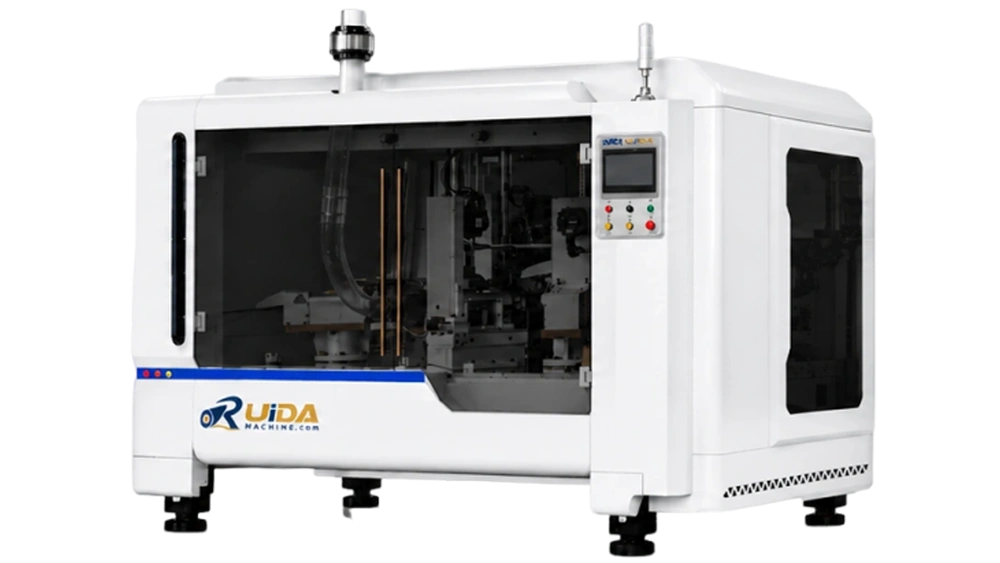
If you are evaluating new equipment with long-term reliability in mind, the RD-XLF200BF Servo Paper Cup Machine is designed for high-speed commercial production with a robust mechanical structure, standardized maintenance access, and readily supported replacement components, helping manufacturers reduce lifecycle operating costs.